


Here’s an uncomfortable truth. Most British people have never actually had a BBQ. They’ve had a grilled lunch with extra optimism. The terms live fire cooking, BBQ, grilling and smoking get used as if they mean the same thing. They don’t. By the end of this guide you’ll know exactly which discipline you’re practising in your back garden, what separates the four, and which one is worth learning next.
Live Fire Cooking vs BBQ: The Short Answer
Live fire cooking means cooking directly over burning wood or hardwood embers, with the fire itself as the only heat source. American-style BBQ is a low and slow technique using indirect heat and smoke at 95 to 135°C. Grilling uses high direct heat above 200°C for short cook times. Smoking is the slow application of wood smoke at low temperatures over several hours.
They overlap occasionally. They are not the same thing. The four disciplines differ in heat source, temperature, cook time and fuel. That’s where the real distinctions live.
Quick Comparison Table
| Discipline | Heat Source | Temperature | Cook Time | Typical Foods |
|---|---|---|---|---|
| Grilling | Gas, charcoal or lumpwood | 200 to 300°C | Under 20 minutes | Steaks, burgers, sausages |
| BBQ (American) | Charcoal plus hardwood | 95 to 135°C | 4 to 12 hours | Brisket, pulled pork, ribs |
| Smoking | Hardwood chunks or pellets | 90 to 135°C | 4 to 18 hours | Brisket, salmon, cheese |
| Live Fire Cooking | Burning hardwood and embers | Variable, fire-managed | Minutes to hours | Anything, cooked over flame or coals |
What Is Live Fire Cooking?
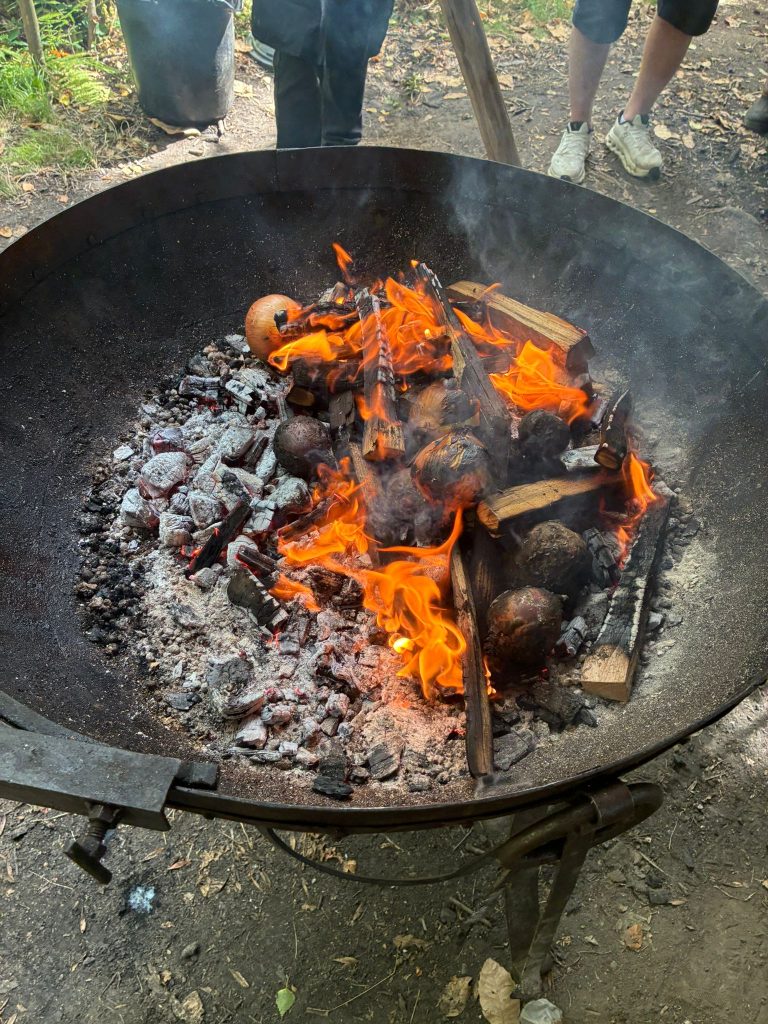
Live fire cooking is the practice of cooking food directly over burning hardwood or its embers, with no gas, briquettes or thermostats involved.
The fire is the tool. You manage flame, ember bed, distance and time. You don’t turn a dial. You read the coals.
The discipline has deep roots. Argentine asado, Basque brace cooking and Nordic primitive fire traditions all sit under this umbrella. Modern restaurants like Brat in London, Mountain and Black Axe Mangal have brought it into the mainstream.
Chefs like Lennox Hastie and Francis Mallmann built reputations on it. So did Tomos Parry. The food world’s most exciting kitchens right now run on wood and embers, not gas hobs.
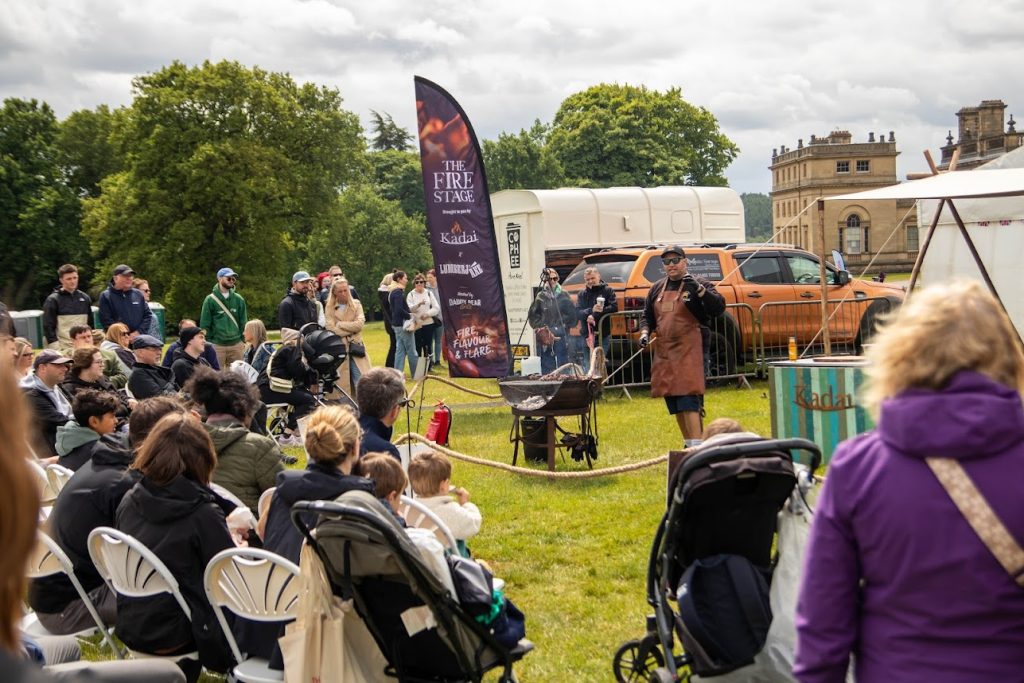
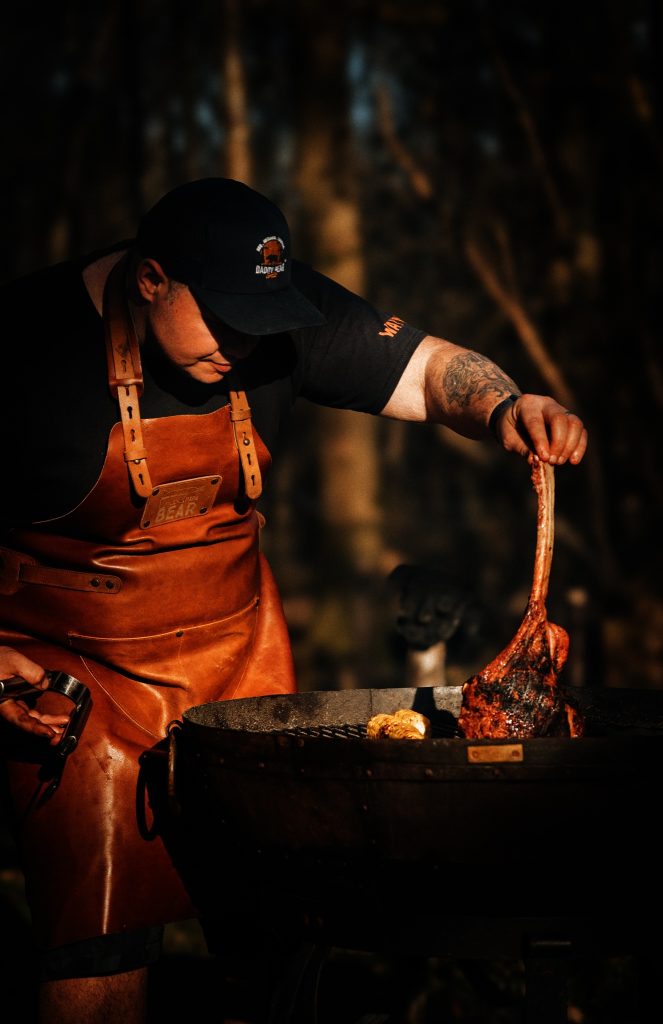
First-hand take: in competition, the hardest part isn’t seasoning or technique. It’s reading your fire 40 minutes before you need it. As a 2024 British Live Fire Cooking Championship Finalist, I can tell you the cooks who win are the ones who manage embers, not flames.
What Is BBQ? And Why Brits and Americans Mean Different Things
BBQ, in its strict American sense, is a low and slow cooking method using indirect heat at 95 to 135°C, often for 4 to 12 hours, with hardwood smoke as a primary flavour.
Think brisket. Pulled pork. Beef short ribs. Pork shoulder. Tough cuts broken down by long, gentle heat.
In Britain, the word means something different. Here, a BBQ is usually a Saturday afternoon, a kettle grill, a tray of sausages and a packet of burger buns. That’s not BBQ in the American sense. That’s grilling.
Why the Terminology Drifts
American BBQ grew out of southern pit-cooking traditions, where whole hogs went underground for the best part of a day. The smoke and slow heat were the whole point.
British BBQ culture came later. It grew from post-war suburban gardens, where the appeal was outdoor cooking itself, not a specific technique. Getting the term right changes what you cook, how you cook it and what kit you need.
What Is Grilling?
Grilling is cooking food over direct, high heat above 200°C for short cook times, usually under 20 minutes.
Fuel can be gas, charcoal briquettes or lumpwood. The food sits directly above the heat source. Maillard browning happens fast. The inside cooks before the outside burns. Sometimes.
Grilling is best suited to thin, tender cuts. Steaks. Chops. Burgers. Sausages. Vegetables. Anything you want cooked in minutes, not hours.
Here’s the honest part. Around 90% of what happens in British back gardens is grilling. There’s nothing wrong with that. It’s a legitimate discipline with its own skill set. Calling it BBQ doesn’t make it BBQ.
What Is Smoking?
Smoking is the slow cooking of food using indirect heat at 90 to 135°C, with hardwood smoke as both a heat source and a flavouring agent.
Cook times run from 4 to 18 hours. The fuel is usually hardwood chunks, chips or pellets. Different woods bring different flavour profiles.
Common Smoking Woods and What They’re Good For
- Oak: all-rounder, strong but balanced, ideal for beef and brisket
- Hickory: bold and bacon-like, perfect for pork shoulder and ribs
- Apple: sweet and mild, brilliant with pork and poultry
- Cherry: fruity, slightly sweet, great with game and duck
- Beech: delicate, well-suited to fish and white meats
Smoking overlaps heavily with American BBQ. The difference is that smoking can also be cold, as with cold-smoked salmon or cheese, where the food never actually cooks.
This is the discipline that demands patience. You plan your day around it. The reward is depth of flavour you can’t fake with anything else.
Live Fire Cooking vs BBQ vs Grilling vs Smoking: Side by Side
The cleanest way to see the differences is to look at the variables that actually separate them. Heat source. Temperature. Time. Fuel. Method.
Refer to the comparison table earlier in this post. Notice that grilling and BBQ sit at opposite ends of the temperature scale. Smoking and BBQ share a temperature range but differ in fuel. Live fire cooking is the only discipline where the fire itself is fully manual, with no thermostat involved at any point.
Which One Are You Actually Doing in Your Back Garden?
Here’s a simple diagnostic. Read these statements and find the one that matches your weekend.
If you cook burgers in 8 minutes over a gas flame, you’re grilling.
If you spend 6 hours over a kettle at 110°C cooking a brisket, that’s smoking and arguably American BBQ.
If you build a wood fire, let it burn down to embers and cook directly over the live coals, congratulations. You’ve crossed into live fire cooking.
None of these is superior. They’re different tools for different jobs. The problem is most home cooks think they’re doing one thing and are actually doing another. Once you know which discipline you’re in, your results get better fast.
Why Live Fire Cooking Is Worth Learning
Three reasons stand out. Flavour, skill and craft.
Nothing matches food cooked directly over hardwood embers. Not gas. Not briquettes. Not pellets. The combination of radiant heat, smoke and char produces something the other disciplines can’t replicate.
It also makes you a better cook across the board. Live fire forces you to read heat zones, manage timing by feel and respect your ingredients. Those skills carry into every other type of cooking you do.
If you want to learn it properly, take a look at our BBQ Class experience. We teach all four disciplines, with live fire cooking as the centrepiece, taught by someone who actually competes at it.
Frequently Asked Questions
Is live fire cooking the same as BBQ?
No. Live fire cooking means cooking directly over burning wood or hardwood embers, with the fire as the only heat source. American BBQ is low and slow at 95 to 135°C using indirect heat. They overlap occasionally but they’re distinct disciplines with different skills and end results.
What’s the difference between BBQ and grilling?
Grilling uses high direct heat above 200°C for short cook times, usually under 20 minutes. American BBQ uses low indirect heat at 95 to 135°C for several hours, with smoke as a primary flavour. If your sausages take 8 minutes, you’re grilling, not BBQing.
What counts as live fire cooking?
Live fire cooking is any cooking done directly over a live wood fire or hardwood embers, with no gas, briquettes or thermostats. The fire is managed manually by feeding wood, raking embers and adjusting distance. Asado, Basque brace cooking and modern restaurants like Brat are all examples.
Do I need special equipment for live fire cooking?
Not necessarily. A basic open fire pit, an adjustable grill grate and good hardwood will get you started. Dedicated setups like asado crosses, parrillas or wood-burning ovens offer more control. The discipline itself is about reading fire, not buying expensive kit.
Is smoking considered BBQ?
In American terminology, yes. Traditional BBQ is essentially slow smoking with indirect hardwood heat at 95 to 135°C. In Britain, BBQ is used more loosely for any outdoor cooking. If you’re cooking brisket for 12 hours over oak, you’re smoking, and by American standards that’s BBQ.
The Bottom Line
Four disciplines. Four different beasts. Grilling is fast and direct. BBQ is slow, indirect and smoky. Smoking is patient and woody. Live fire cooking is the highest-skill of the lot, built on flame, ember and instinct.
They all share one thing. Fire as a tool, not a convenience.
If you want to step beyond grilling and learn how to cook over live fire properly, the same way competition chefs do, that’s exactly what we teach at the Daddy Bear Grills BBQ Class. Come and find out which discipline you’re really suited to.