


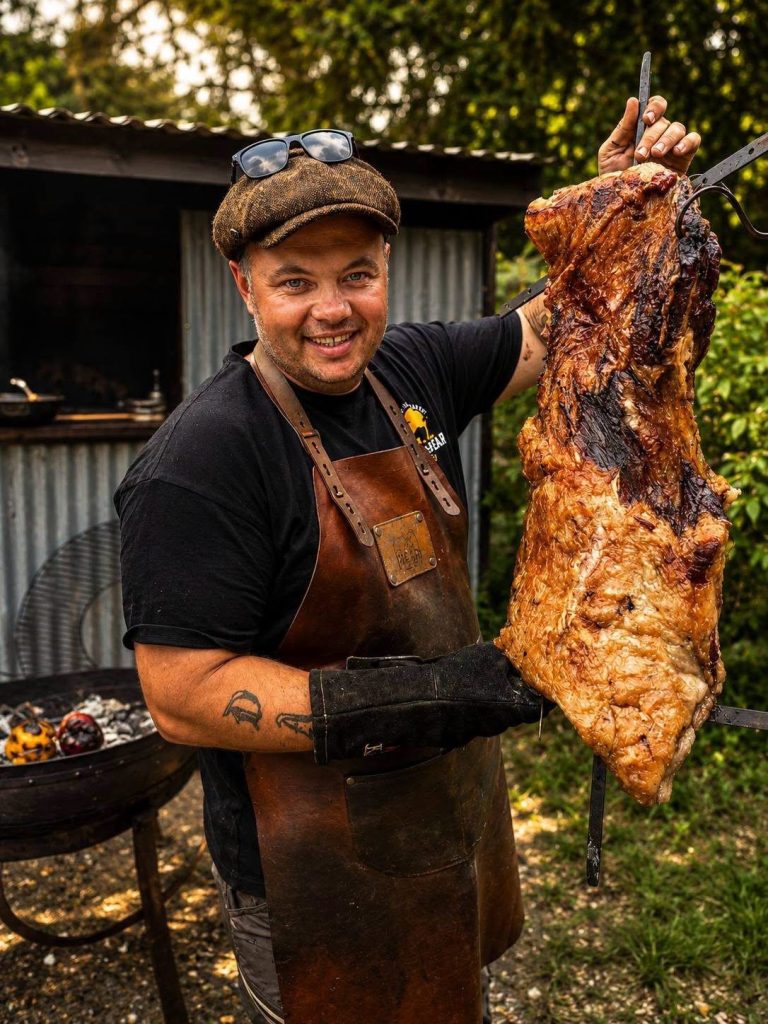
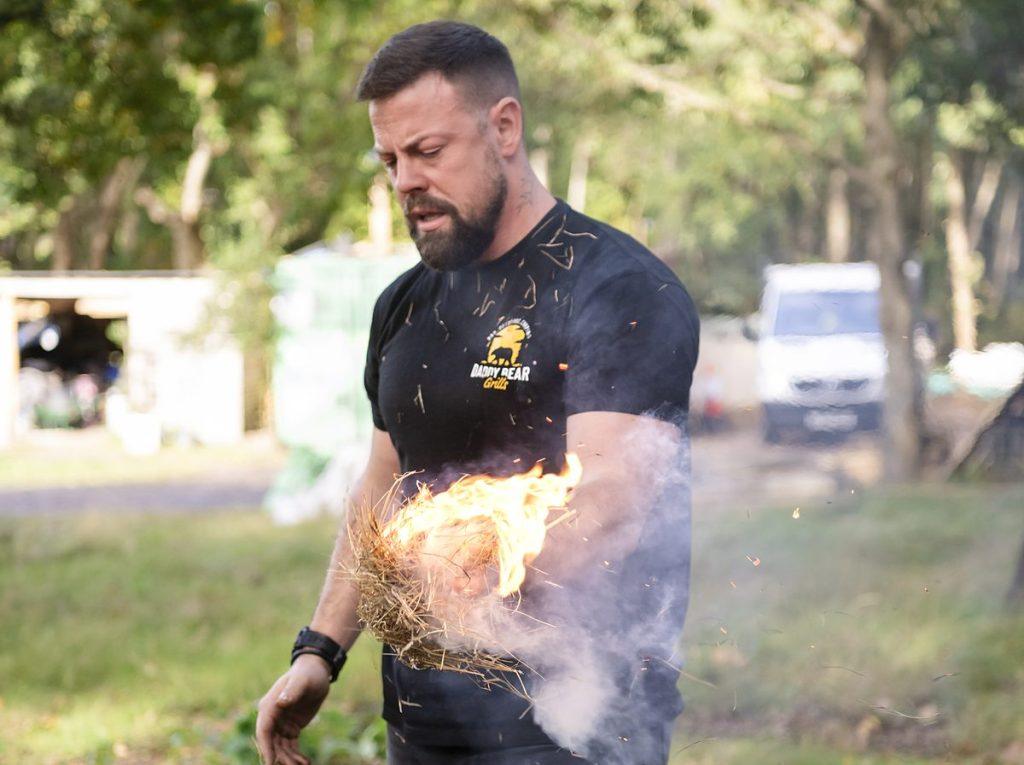
Learning how to build a cooking fire starts with choosing the right wood, building a proper structure and waiting for hot embers before you cook. The biggest mistake most people make is cooking over flames instead of embers. This guide covers everything from wood selection to heat control, fire safety and common mistakes. Explore Daddy Bear Grills to discover our live fire experiences, recipes, tips and more.
How to build a cooking fire is one of the most important outdoor cooking skills you can learn. To build a great cooking fire, start with kiln-dried hardwood such as oak, ash or beech. Build a teepee or log cabin structure using kindling and small logs. Light from the base and let the fire burn for 45 to 60 minutes until you have a bed of glowing embers. Then create heat zones by raking embers to one side for direct cooking and leaving the other side cooler for indirect heat.
That is the short version. But there is a lot more to it if you want consistent, flavourful results every time you cook outdoors.
Here at Daddy Bear Grills, we have spent years cooking over open flames in our private woodland in Kent. Our head fire chef, Wayne Smith, was a finalist in the British Live Fire Cooking Championships at Ludlow Castle. Fire management for cooking is something we practise and teach every single day at our woodland site, Liz’s Yard.
This guide shares exactly what we have learned. No fluff. Just practical, tested advice that works.
Table of Contents
- What Wood Should You Use for a Cooking Fire?
- How Much Does Cooking Firewood Cost in the UK?
- How Do You Build a Cooking Fire Step by Step?
- How Do You Control Heat Zones on an Open Fire?
- Should You Cook on Flames or Embers?
- What Are the 10 Most Common Fire Building Mistakes?
- What Are the UK Fire Safety Rules for Outdoor Cooking?
- What Fire Cooking Trends Are Emerging in 2026?
- How to Learn Fire Management at Our Woodland Classes
- FAQs
What Wood Should You Use for a Cooking Fire?
Wood is not just fuel. It is an ingredient. The type of wood you use directly affects the flavour of your food, how long your fire lasts and how easy it is to control.
Here is the simple rule. Always use hardwood. Never use softwood for cooking.
Hardwoods come from deciduous trees. They burn hotter, produce longer lasting embers and give off cleaner smoke. Softwoods like pine are resinous. They spit, spark and leave a bitter, acrid taste on your food.
Best UK Hardwoods for Cooking
Here is a quick breakdown of the most common UK hardwoods for fire cooking.
- Oak. High heat output, long burn time, medium earthy smoke flavour. Brilliant for beef, lamb and long cooks.
- Ash. High heat, medium to long burn, mild clean smoke. The best all rounder for any type of cooking.
- Beech. Medium to high heat, medium burn, mild nutty smoke. Great for poultry and fish.
- Apple. Medium heat, medium burn, sweet fruity smoke. Perfect for pork and chicken.
- Cherry. Medium heat, medium burn, sweet mild smoke. Lovely with fish and vegetables.
What to Avoid
- Pine, spruce or any softwood. Too much smoke, too many sparks, bitter taste.
- Treated or painted wood. Releases toxic chemicals. Never burn this.
- Damp or green wood. High moisture means poor heat, thick smoke and an unpleasant flavour.
Always look for kiln-dried or well seasoned hardwood with a moisture content below 20%. This is the single biggest factor in getting a clean, hot, reliable cooking fire.
At Liz’s Yard in Kent, we use locally sourced ash and beech for most of our cooking. They produce the cleanest embers we have worked with and they pair well with almost everything we cook.
How Much Does Cooking Firewood Cost in the UK?
This is a question most guides ignore. But if you are planning to cook over fire regularly, it helps to know what you will spend.
Here are typical UK prices for kiln-dried hardwood in 2026.
- Kiln-dried hardwood bags (8 to 10 kg). Around 5 to 8 pounds per bag.
- Bulk loose loads. Around 80 to 150 pounds per cubic metre.
- Kindling bundles. Around 3 to 5 pounds.
- Pizza oven batons (12 inch). Around 6 to 10 pounds per bag.
Buying locally is always worth it. You support British woodland management, reduce transport emissions and usually get fresher, better quality wood. If you are based in Kent or the South East, ask local firewood suppliers for cooking grade hardwood specifically.
How Do You Build a Cooking Fire Step by Step?
There are two main methods for building a fire for BBQ and outdoor cooking. Both work well. The one you choose depends on what you are cooking and how long you need the fire to last.
What Is the Teepee Method?
The teepee method is the fastest way to get a fire going. It is best for quick, hot fires and when you need flames that collapse into embers fairly quickly.
Step by step:
- Place a ball of tinder in the centre of your fire area. This can be scrunched newspaper, natural firelighters or wood wool.
- Lean small kindling sticks around the tinder in a cone shape, like a teepee.
- Add slightly larger sticks around the outside, leaving gaps for air flow.
- Light the tinder from the base. Fire travels upward, so this catches the kindling above.
- Once the kindling is burning well, add two or three larger split hardwood logs.
The teepee structure collapses as it burns. This creates a hot ember bed within about 30 to 40 minutes.
We use this method at our live fire experiences when we want flames quickly for searing, such as with tomahawk steaks and cowboy butter.
What Is the Log Cabin Method?
The log cabin method is better for longer cooks. It creates a more stable, even ember bed, which makes it ideal for grilling over a grate.
Step by step:
- Lay two parallel logs on the ground, roughly 30 cm apart.
- Stack two more logs perpendicular across the top, like a Jenga tower.
- Continue stacking three or four layers, making each layer slightly smaller.
- Place kindling and tinder inside the cabin at the base.
- Light from the bottom. The structure burns inward and downward, creating an even bed of coals.
This is Wayne’s go to method at our woodland classes. It gives a flat, predictable ember bed that is perfect for grill cooking and for feeding more wood in over time without losing your heat zones.
How Long Should You Burn a Fire Before Cooking?
This is where patience matters. Most beginners start cooking too early.
- Minimum burn time. 45 to 60 minutes before you cook.
- For larger joints or whole meats. Start 90 minutes early.
- Visual cues your fire is ready. Flames have mostly died down. Embers glow red and white. A light grey ash has formed on the surface.
Here is the thing. Rushing this step is the single most common reason food gets charred on the outside and stays raw in the middle.
How Do You Control Heat Zones on an Open Fire?
Controlling heat on an open fire is what separates a good outdoor cook from someone who burns sausages. The concept is simple. You create different temperature zones, just like you would on a gas hob.
How to Create Heat Zones
- Hot zone (direct heat). Rake a thick layer of embers to one side. This is your searing and grilling area.
- Cool zone (indirect heat). Leave the other side with fewer embers or none at all. This is for slow cooking, resting meat or keeping food warm.
- Three zone setup. For larger fires, create a hot, medium and cool zone. This gives you maximum flexibility.
You can also control temperature by adjusting the height of your grill grate above the embers. Closer means hotter. Further away means gentler heat.
The Hand Test: How to Gauge Fire Temperature
You do not need a fancy thermometer to estimate your fire temperature. The hand test is a reliable old method.
Hold your palm about 15 cm (roughly 6 inches) above the embers. Count how many seconds you can comfortably hold it there.
- 1 to 2 seconds. High heat, around 230 to 290 degrees Celsius. Good for searing steaks.
- 3 to 4 seconds. Medium heat, around 175 to 230 degrees Celsius. Good for burgers, sausages and chicken.
- 5 to 6 seconds. Low heat, around 120 to 175 degrees Celsius. Good for slow cooking, smoking and warming.
Always use common sense. Pull your hand away immediately if it feels too hot.
Should You Cook on Flames or Embers?
This is the most important thing to understand about fire cooking.
Cook on embers. Almost always.
Flames are exciting to look at. But they are terrible for cooking. Flames give off unpredictable, uneven heat. They will char the outside of your food while leaving the inside raw.
Embers are the opposite. They produce steady, radiating heat that cooks food evenly from the outside in. This is why every experienced fire cook will tell you to wait for your flames to die down.
The only exception is brief flame contact for searing. At our live fire cooking demonstrations, we sometimes cook caveman style directly on the coals for a deep, smoky char. But even that relies on embers, not open flames.
One of the biggest breakthroughs in Wayne’s cooking journey was learning to be patient with the fire. Let the flames do their job, which is turning wood into beautiful, glowing embers. That is when the real cooking starts.
What Are the 10 Most Common Fire Building Mistakes?
You might be wondering what goes wrong most often. Here are the ten mistakes we see time and again at our live fire and BBQ classes.
- Using damp or unseasoned wood. This produces bitter smoke, weak heat and endless frustration.
- Building the fire too big. A 30 cm by 30 cm fire is enough for four to six people. Bigger is not better.
- Cooking over flames instead of embers. Burnt outside, raw inside. Every time.
- Not starting the fire early enough. You need at least 45 minutes. Plan ahead.
- Smothering the fire with too many logs at once. This starves the fire of oxygen and kills it.
- Using softwood or treated timber. Toxic fumes and terrible flavour.
- Ignoring wind direction. This puts smoke in your face and creates uneven heat across your cooking area.
- Not creating heat zones. Without them, you have no temperature control.
- Using petrol or paraffin to light the fire. This is dangerous and ruins the flavour of your food. The UK government specifically warns against this.
- Not having water or sand nearby. Always keep a bucket of water, sand or a garden hose within arm’s reach for emergencies.
What Are the UK Fire Safety Rules for Outdoor Cooking?
Fire safety is not optional. It is essential. The UK government has clear guidance on outdoor fire and barbecue safety that every fire cook should know.
According to the GOV.UK Fire Safety Outdoors guidance, the key rules include:
- Never use petrol or paraffin to start or revive a fire. Use only recognised firelighters or starter fuel on cold coals.
- Keep your fire well away from fences, sheds, trees, shrubs and garden waste.
- Use enough charcoal or wood to cover the base, but no more.
- Keep children, pets and garden games well away from the cooking area.
- Always have a bucket of water, sand or garden hose nearby.
- After cooking, make sure everything is completely cool before moving it. Empty ashes onto bare garden soil, never into dustbins or wheelie bins.
Is It Legal to Have a Cooking Fire in Your Garden?
There is no specific law against having a fire in your garden in the UK. However, there are important regulations to be aware of.
- The Environmental Protection Act 1990 means that persistent smoke from fires can be treated as a statutory nuisance. If neighbours complain, your local council can take action.
- The Clean Air Act 1993 establishes Smoke Control Areas in many parts of the UK. If you live in one, you may be restricted from burning wood openly. Check with your local council.
- On public land, always check local bylaws. Many parks and public spaces ban open fires entirely.
If you are cooking in Kent, check the Kent Fire and Rescue Service website for any seasonal fire safety alerts or restrictions.
What Fire Cooking Trends Are Emerging in 2026?
Live fire cooking continues to grow in popularity across the UK. Here are some trends we are seeing at Daddy Bear Grills and across the wider outdoor cooking community in 2026.
- Woodland and outdoor cooking experiences are booming. More people are looking for hands on, offline experiences. Fire cooking classes have seen a surge in interest as people seek out skills based activities away from screens.
- Sustainability is becoming central. Cooks are increasingly choosing locally sourced, sustainably managed British hardwood. This supports woodland conservation and reduces the carbon footprint of your fire.
- Low and slow fire cooking is going mainstream. Techniques like asado style whole animal roasting and long smoked cuts are no longer just for competition pitmasters. Home cooks are investing in fire pits and adjustable grates to cook this way at home.
- Fire cooking as wellbeing. The connection between outdoor cooking and mental health is gaining real recognition. Slowing down, being present with the fire and cooking for people you care about. It is being talked about more openly as a genuine form of stress relief.
- Social media is driving interest. Platforms like YouTube and Instagram are making fire cooking accessible to a wider audience, inspiring people to try it for themselves.
We have seen this first hand at Liz’s Yard. More and more people are booking our experiences not just for the food, but for the chance to switch off, learn something new and connect with others around the fire.
How to Learn Fire Management at Our Woodland Classes
Reading about fire cooking is a great start. But there is nothing like doing it in person.
At Daddy Bear Grills, we run live fire and BBQ experience classes in our private woodland in Kent. Our founder Wayne Smith leads these sessions, sharing the techniques he has developed over years of fire cooking, including during his time competing at the British Live Fire Cooking Championships at Ludlow Castle.
Here is what you can expect.
- Hands on fire building. You will learn how to build a cooking fire from scratch using the methods in this guide.
- Wood selection and preparation. Understanding which wood to use and why.
- Heat management. Creating and controlling heat zones for different cooking styles.
- Cooking over fire. From tomahawk steaks and cowboy butter to skewered chicken shawarma and homemade flatbreads cooked over embers.
We also offer corporate team building experiences, VIP private dining and live fire cooking demonstrations for events and festivals.
To find out more or to book, visit our experiences page or get in touch.
FAQs
What is the best wood for a cooking fire in the UK? Oak, ash and beech are the best all round choices for fire cooking in the UK. They burn hot, produce long lasting embers and give off clean smoke. Fruit woods like apple and cherry add a sweet, mild flavour that works well with poultry, pork and fish. Always use kiln-dried or well seasoned wood with a moisture content below 20%.
How long does it take to build a cooking fire that is ready to cook on? Allow 45 to 60 minutes from lighting to cooking. You need time for the wood to burn down into glowing embers, which provide steady, controllable heat. For larger cooks like whole joints or asado style feasts, start 90 minutes early.
Can you cook directly over flames? You should almost always cook on embers, not flames. Embers provide consistent, even heat. Flames are unpredictable and will char the outside of your food while leaving the inside raw. The only exception is brief flame contact for searing steaks or charring vegetables directly on the coals.
Is it legal to have a cooking fire in your garden in the UK? There is no specific law banning garden fires in the UK. However, the Environmental Protection Act 1990 means persistent smoke can be treated as a nuisance by your local council. You should also check whether you are in a Smoke Control Area under the Clean Air Act 1993. Always follow the GOV.UK fire safety outdoors guidance.
What is the hand test for checking fire temperature? Hold your palm about 15 cm above the embers and count how many seconds you can hold it comfortably. One to two seconds means high heat (around 230 to 290 degrees Celsius). Three to four seconds is medium heat (175 to 230 degrees Celsius). Five to six seconds is low heat (120 to 175 degrees Celsius).
What is the difference between the teepee and log cabin fire methods? The teepee method stacks kindling in a cone shape. It lights quickly and collapses into embers fast, making it ideal for short, hot cooks. The log cabin method stacks logs in a square tower, like Jenga. It burns more evenly and creates a flatter ember bed, which is better for grill cooking and longer sessions.
Do you need expensive equipment to cook over a fire? Not at all. A basic fire cooking setup needs firewood, firelighters, a grill grate and a pair of long handled tongs. A cast iron skillet or Dutch oven is a worthwhile addition. You can get started for well under 50 pounds. Quality gear like adjustable height grates or tripod systems gives you more control as your skills develop.
Where can I learn fire cooking in Kent? Daddy Bear Grills runs live fire and BBQ experience classes at Liz’s Yard, a private woodland in Kent. Sessions are led by Wayne Smith, a finalist in the British Live Fire Cooking Championships. You will learn fire building, wood selection, heat management and cooking techniques hands on.
Wrapping Up
Building a cooking fire is not complicated. But doing it well takes a bit of knowledge and a lot of patience.
Choose the right wood. Build a proper structure. Wait for embers. Create heat zones. And always, always have water nearby.
These are the foundations of every great fire cook. Whether you are grilling sausages in your garden or slow roasting a whole joint in the woods, the principles are the same.
If you want to take your skills further, come and join us in the Kent woodland. There is nothing quite like learning fire cooking by actually doing it, surrounded by fresh air, good food and the crackle of a well built fire.
Explore our full range of fire cooking experiences or browse our recipes and tips for more inspiration.