

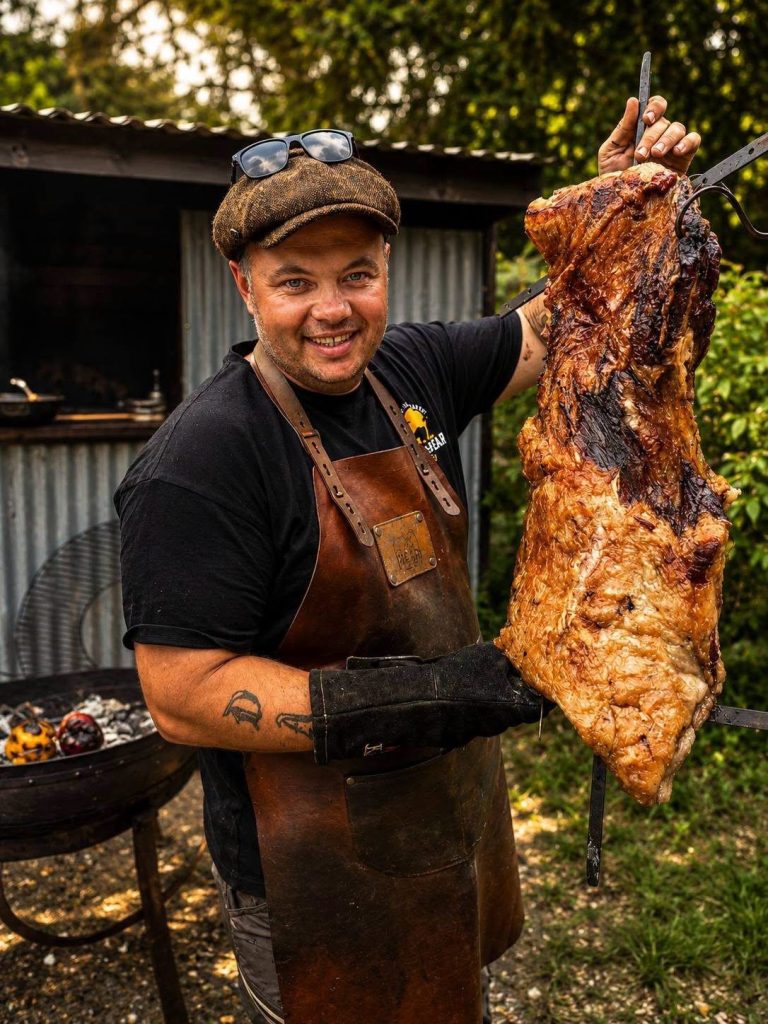
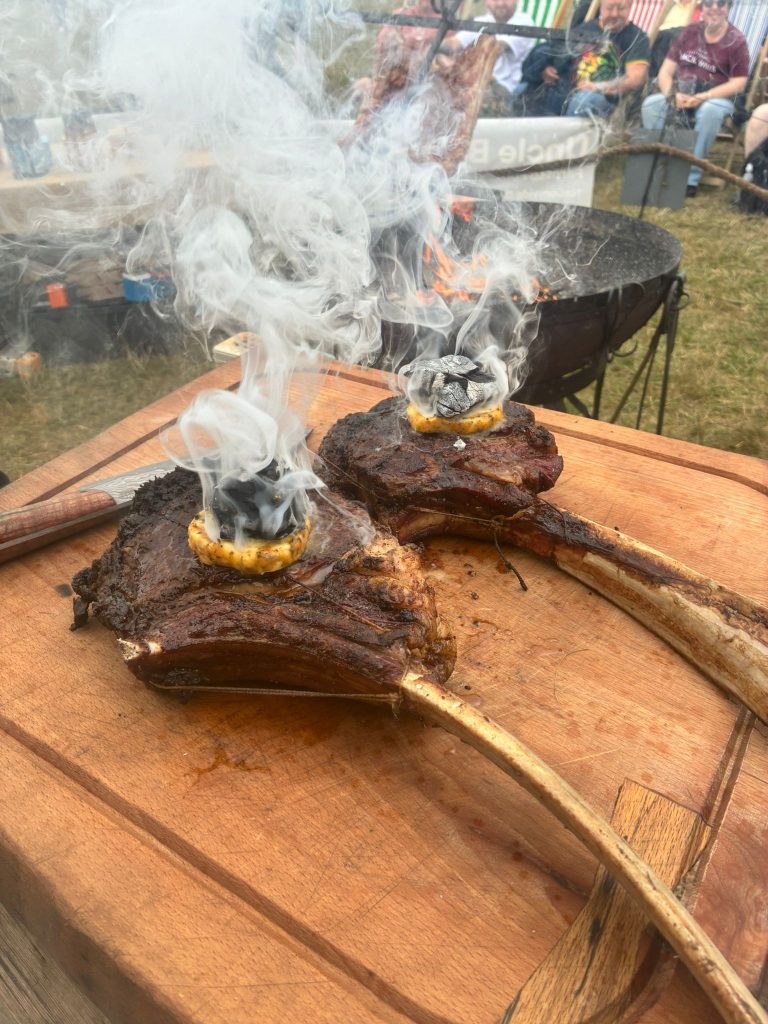
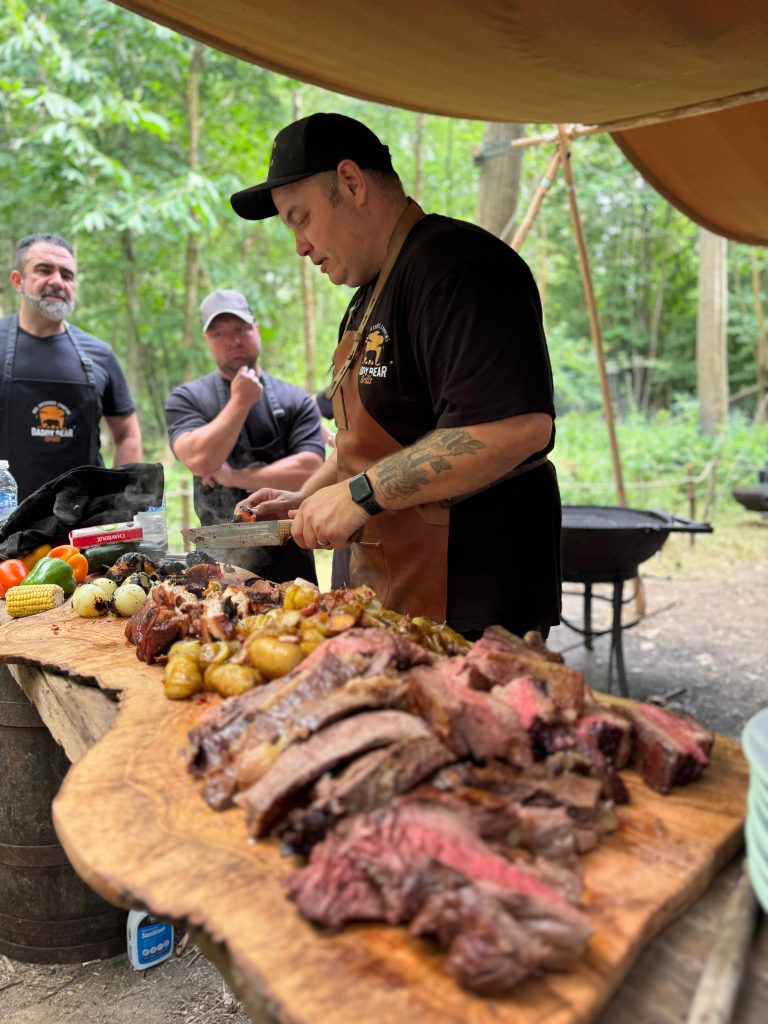
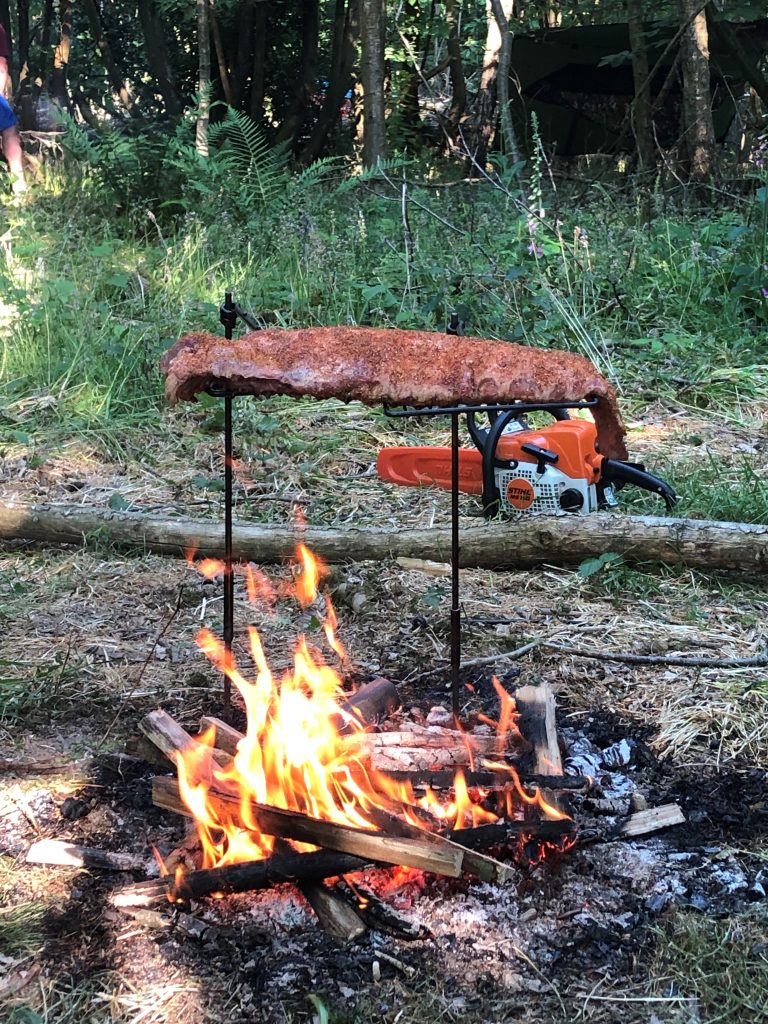
Live fire cooking is the art of preparing food over burning wood or charcoal embers instead of gas or electric heat. It includes methods like direct grilling, ember cooking, asado-style roasting, and smoking. This guide covers everything you need to know to get started, from essential equipment and costs to safety tips and the best woods to use. Explore more fire cooking inspiration on our website or get in touch to book a live fire experience in Kent.
Written by Wayne Smith, Live Fire Chef and Founder of Daddy Bear Grills. Finalist in the British Live Fire Cooking Championships at Ludlow Castle.
Table of Contents
- What Is Live Fire Cooking?
- How Is Live Fire Cooking Different from Regular BBQ?
- The History of Cooking Over Open Flames
- Live Fire vs Gas vs Charcoal BBQ: What Is the Difference?
- What Are the Main Types of Live Fire Cooking Methods?
- What Equipment Do You Need to Get Started?
- How Much Does It Cost to Start Live Fire Cooking in the UK?
- What Wood Should You Use for Live Fire Cooking?
- Top 10 Tips for Live Fire Cooking Beginners
- Is Live Fire Cooking Safe in Your Garden?
- Why Is Live Fire Cooking Making a Comeback in 2026?
- How to Try Live Fire Cooking in Kent
- FAQs
What Is Live Fire Cooking?
Live fire cooking is a method of preparing food over burning wood or charcoal embers rather than using gas or electricity. Instead of turning a dial, you build a real fire, let it burn down to glowing coals, and cook your food over that natural heat. The result is deep, smoky flavour that no gas grill can match.
Here is the thing. Live fire cooking is not just one technique. It is a whole family of methods, including:
- Direct grilling over hot embers
- Indirect and ember cooking next to the fire
- Asado-style roasting using Argentine and South American traditions
- Smoking and hanging food above the fire for slow, gentle heat
People have cooked this way for thousands of years. It is the oldest form of cooking, and it is making a huge comeback across the UK. Whether you are a total beginner or you have been grilling for years, this guide will walk you through everything you need to know.
How Is Live Fire Cooking Different from Regular BBQ?
You might be wondering, is this not just barbecuing? Not quite.
A regular gas BBQ uses controlled burners for convenience. You press a button, adjust a dial, and you are cooking. It is easy, predictable, and fast.
Live fire cooking is different. You use wood or charcoal as your only fuel source. You manage the fire yourself. You control the temperature by moving embers, raising the grate, or adjusting airflow.
The key differences are:
- Fuel: Live fire uses wood or lumpwood charcoal. Gas BBQ uses propane or natural gas.
- Flavour: Wood smoke gives a deeper, more complex taste. Gas gives a cleaner but flatter flavour.
- Skill: Live fire requires more hands-on involvement. Gas is more plug and play.
- Experience: Live fire cooking is as much about the process as the food itself. It slows you down. It connects you to what you are making.
As we say at Daddy Bear Grills, fire cooking is not chaos. It is control. Every flicker, spark, and sear is deliberate.
The History of Cooking Over Open Flames
Humans have been cooking with fire longer than almost anything else we do. Evidence suggests our ancestors began using controlled fire as far back as 1.8 million years ago, when Homo erectus first emerged.
According to research from Harvard University, cooking food over fire was a turning point in human evolution. It made food easier to chew and digest. It unlocked more calories. It may have helped our brains grow larger over time. Read more from the Harvard Gazette here.
Archaeological evidence at Wonderwerk Cave in South Africa dates fire use to over one million years ago. At Gesher Benot Ya’aqov in Israel, researchers found signs of cooked fish dating back 780,000 years, as reported by Scientific American.
From ancient hearths to Argentine asado and British spit roasting, cooking over an open flame has been part of every culture throughout history. When you light a fire and cook over it today, you are carrying on a tradition that goes back to the very beginning of what makes us human.
Live Fire vs Gas vs Charcoal BBQ: What Is the Difference?
This is one of the most common questions beginners ask. Here is a straightforward comparison.
| Feature | Live Fire (Wood) | Charcoal BBQ | Gas BBQ |
|---|---|---|---|
| Flavour | Deep, smoky, complex | Good smoke flavour | Clean, less smoky |
| Temperature control | Manual, skill based | Moderate control | Precise, easy |
| Setup time | 30 to 45 minutes | 15 to 20 minutes | 5 minutes |
| Learning curve | Steep but rewarding | Moderate | Low |
| Fuel | Hardwood logs | Charcoal briquettes or lumpwood | Propane or gas |
| Best for | Flavour chasers and experience seekers | Weekend grillers | Quick convenience |
The short version: live fire wins on flavour. Gas wins on speed and convenience. Charcoal sits somewhere in the middle. If you want the full experience, the deep smoky taste, and the satisfaction of cooking with real fire, then live fire is the way to go.
What Are the Main Types of Live Fire Cooking Methods?
Live fire cooking covers several different techniques. Each one produces different results and suits different types of food.
Direct Grilling
This is the simplest method. You place your food directly over hot embers on a grill grate. It works best for quick cooking items like steaks, burgers, sausages, vegetables, and flatbreads.
The key rule: always wait for your fire to burn down to white, glowing coals before you start cooking. Open flames will cover your food in soot and give a bitter taste.
Indirect and Ember Cooking
With indirect cooking, your food sits next to the fire rather than directly above it. This is ideal for larger cuts that need longer, slower cooking. Think whole chickens, joints of lamb, or pork shoulders.
Ember cooking, sometimes called caveman style, takes things further. You place food directly onto the glowing coals themselves. It sounds extreme, but it works brilliantly for thick cut steaks, whole aubergines, and sweet potatoes. We feature caveman style dirty cooking in our own recipes at Daddy Bear Grills.
Asado Style
Asado is the traditional Argentine method of live fire cooking. Large cuts of meat are slow roasted over wood embers, often on a cross (called a cruz) or a parrilla grill. The emphasis is on simplicity: good meat, salt, fire, and patience.
At Daddy Bear Grills, asado and Brazilian churrasco are at the heart of what we do. Our live fire cooking experiences teach this tradition hands on, right here in Kent. It is one of the most rewarding ways to cook for a group.
Hanging and Smoking
Hanging frames suspend food above the fire so it cooks slowly in gentle heat and smoke. This method is popular across the UK, with brands like Fire Made UK producing handcrafted hanging systems in Somerset.
Smoking uses lower temperatures and longer cook times. The type of wood you choose, oak, cherry, apple, or hickory, directly impacts the flavour. Cold smoking and hot smoking are the two main approaches, each giving different results.
What Equipment Do You Need to Get Started?
You do not need expensive kit to start live fire cooking. Here is what matters most.
Essential equipment for beginners:
- A fire pit, grill, or open fire setup. This could be a basic steel fire pit, a ring of bricks, or a dedicated asado grill.
- Kiln dried hardwood logs. Oak, beech, or ash. Never softwood or treated timber.
- Lumpwood charcoal. Useful as a supplement to get your fire started.
- Natural firelighters. Avoid chemical based ones. They taint the flavour.
- Long handled tongs. At least 40cm to keep your hands away from the heat.
- Heat resistant gloves. Leather or aramid fibre.
- An instant read thermometer or temperature probe. Cook to temperature, not time.
- A cast iron skillet or Dutch oven. Versatile and practically indestructible over fire.
- A grill grate or tripod. To create a solid cooking surface above the embers.
- A fire rake or poker. For managing embers and creating heat zones.
You can absolutely start with gear you already own. Old oven racks propped on bricks work fine. As your skills grow, you can invest in more specialist equipment.
How Much Does It Cost to Start Live Fire Cooking in the UK?
One of the best things about live fire cooking is that it does not have to cost a fortune. Here is a realistic breakdown.
| Level | What You Get | Approximate Cost |
|---|---|---|
| Budget | Basic fire pit or DIY brick setup, grate, tongs, gloves, bag of lumpwood charcoal, kiln dried log box | Around 50 to 150 pounds |
| Mid range | Quality fire pit or Kadai bowl, cast iron skillet set, temperature probe, quality hardwood supply, fire rake | Around 200 to 500 pounds |
| Premium | Dedicated asado grill or hanging frame system, full cast iron cookware set, premium wood supply, specialist tools | 500 to 2,000 pounds or more |
Ongoing fuel costs depend on how often you cook. A box of kiln dried logs from UK suppliers typically starts from around 35 pounds. Lumpwood charcoal runs between 5 and 15 pounds per bag.
The point is this: you do not need to spend thousands. A basic setup and a bag of good hardwood logs is enough to get started this weekend.
What Wood Should You Use for Live Fire Cooking?
The wood you use makes a massive difference to flavour. Always use kiln dried or well seasoned hardwood. Never burn softwood like pine or spruce, as it produces excessive resin, soot, and a bitter taste. Never burn treated, painted, or green (freshly cut) wood.
Here is a quick guide to the most common cooking woods in the UK:
| Wood Type | Flavour Profile | Best For |
|---|---|---|
| Oak | Strong, classic smoke | Red meat, brisket, beef ribs |
| Beech | Mild, slightly sweet | Poultry, fish |
| Cherry | Sweet, fruity | Pork, lamb |
| Apple | Light, delicate | Chicken, vegetables |
| Birch | Medium, slightly sweet | All rounder |
When buying firewood in the UK, look for the “Ready to Burn” certification. This is the Woodsure scheme backed by DEFRA, confirming the wood has a moisture content below 20 percent. Drier wood burns cleaner, produces less smoke, and gives you better results.
Top 10 Tips for Live Fire Cooking Beginners
Here are the ten most important things I have learned from years of cooking over fire, including competing as a finalist in the British Live Fire Cooking Championships.
- Cook over embers, not flames. Wait for white ash on your coals before you put any food on. This is the single biggest mistake beginners make.
- Create heat zones. Push embers to one side for a hot zone and leave the other side cooler. This gives you control.
- Use a thermometer. Internal temperature is the only reliable way to know when meat is done. Do not guess.
- Start with simple cooks. A good steak, some vegetables, and flatbreads cooked over embers. You do not need to attempt a 12 hour brisket on day one.
- Choose the right wood. Kiln dried hardwood only. Oak for strong smoke, cherry for sweetness, beech for mildness.
- Never leave your fire unattended. Always have water or sand nearby in case things get out of hand.
- Do not overcrowd the grill. Your food needs airflow around it to cook evenly. Give everything space.
- Let your meat rest. After cooking, let it sit for at least five to ten minutes before cutting. The juices need time to settle.
- Practice fire management. The more you cook, the better you get at reading your fire. There is no shortcut for this.
- Enjoy the process. Live fire cooking is about slowing down, being outdoors, and savouring the experience. As we wrote in our blog, cooking over fire is cheaper than therapy.
Is Live Fire Cooking Safe in Your Garden?
Yes. Fire pits are legal in UK gardens under most circumstances. However, there are a few important rules to follow.
UK fire safety rules to know:
- Under the Environmental Protection Act 1990, smoke from your fire must not cause a “statutory nuisance” to your neighbours.
- You cannot burn household waste, plastics, or treated wood.
- Smoke must not drift onto public roads and obstruct drivers.
- If you live in a Smoke Control Area (most of London, parts of Birmingham, Manchester, and other cities), check with your local council about specific restrictions. Most garden fire pits are usually still permitted, but it is worth confirming.
- Keep your fire at least three metres from buildings, fences, and overhanging branches.
- Always supervise your fire until it is completely extinguished.
For full details, check the GOV.UK guidance on garden bonfires.
Why Is Live Fire Cooking Making a Comeback in 2026?
Live fire cooking is not just surviving. It is booming. Here is why it is one of the biggest food trends in the UK right now.
The UK festival scene is on fire. Events like Meatopia On-Fire, the Smoke and Fire Festival, and the Embers Fire Festival are all returning bigger than ever in 2026. The British Live Fire Cooking Championships, held at Ludlow Castle, continues to attract pitmasters and fire cooks from across the country.
Social media is fuelling the movement. YouTube channels and Instagram creators dedicated to fire cooking are growing fast. People want to see real food cooked over real flames, not polished marketing shots. At Daddy Bear Grills, we share our cooks, tips, and behind the scenes content on our YouTube channel and podcast.
The slow living movement. After years of screens, speed, and convenience, people are craving hands on, outdoor experiences. Live fire cooking delivers exactly that. It is physical, sensory, social, and deeply satisfying.
Celebrity chefs are championing it. Across the UK, chefs like Andrew Clarke of Acme Fire Cult and food writers like Helen Graves (author of the cookbook Live Fire) are pushing the boundaries of what you can cook over an open flame. Barbecue trend reports for 2026 highlight adjustable grate grills and wood fired braseros as the defining equipment trends of the year.
The equipment is more accessible than ever. British manufacturers are now producing high quality fire cooking gear at every price point. From Devon forged cooking tripods to Shropshire made cast iron and Somerset built asado frames, there is incredible UK made kit available.
How to Try Live Fire Cooking in Kent
If you are in or around Kent and want to experience live fire cooking for yourself, this is exactly what we do at Daddy Bear Grills.
We run live fire and BBQ experience classes in our private woodland setting at Liz’s Yard in Kent. The woodland is named after Wayne’s late mother, Liz, who first sparked his love of cooking.
Our sessions are hands on. You will learn how to build and manage a fire, cook over open flames using different techniques, and sit down to a full fire cooked feast at the end. No experience is needed. We welcome complete beginners alongside seasoned grillers.
We also offer:
- Corporate team building experiences built around fire and food
- Live fire cooking demonstrations for festivals and events
- VIP private dining with an exclusive fire cooked menu
- Corporate event catering anywhere you need it
You can explore all of our experiences here or get in touch to chat about what would work for you.
FAQs
What exactly is live fire cooking?
Live fire cooking means preparing food over burning wood or charcoal embers rather than gas or electricity. It includes methods like direct grilling, ember cooking, smoking, and asado style roasting. The real cooking heat comes from glowing embers, not open flames.
Is live fire cooking the same as having a BBQ?
Not quite. A traditional gas BBQ uses controlled gas burners for convenience. Live fire cooking uses wood or charcoal as the sole fuel, requiring you to manage the fire yourself. The flavour is noticeably deeper and smokier because of this direct relationship with real fire.
What is the best wood for cooking over fire?
Kiln dried hardwoods are best. Oak gives a strong, classic smoke flavour. Cherry and apple are sweeter and lighter, great for poultry and pork. Beech works well for fish. Never use softwood like pine or spruce, and never use treated timber. Both produce harmful smoke and a bitter taste.
Is it legal to cook over fire in my garden in the UK?
Yes. Fire pits are legal in UK gardens under most circumstances. Under the Environmental Protection Act 1990, smoke must not cause a nuisance to neighbours. If you live in a Smoke Control Area, check your local council for specific rules. Do not burn plastics, household waste, or treated wood.
Can you do live fire cooking in winter?
Absolutely. Many experienced fire cooks in the UK cook outdoors year round, even in the cold and rain. Dress warmly, use a sheltered spot, and keep your fire well stocked. Winter cooking over fire is a brilliant experience. There is something special about standing by a roaring fire on a cold evening with good food cooking.
Do I need a lot of space for live fire cooking?
Not necessarily. A small fire pit or portable grill works in most UK gardens. Keep at least three metres of clearance from buildings, fences, and overhanging branches for safety. Even a modest patio can work with the right setup.
Is live fire cooking actually better than gas grilling?
In terms of pure flavour, yes. The smoke from burning wood adds layers of depth that gas simply cannot replicate. However, gas is faster and easier to control. Live fire cooking is about the experience as much as the food. It takes more time and skill, but the results and the ritual make it worth every minute.
Where can I try live fire cooking in Kent?
Daddy Bear Grills runs hands on live fire and BBQ experience classes in a private woodland in Kent. Sessions are suitable for all skill levels, from complete beginners to experienced grillers. Get in touch to find out more.
Conclusion
Live fire cooking is one of the most rewarding ways to prepare food. It connects you to a tradition that stretches back nearly two million years. It delivers flavour that no gas grill or oven can match. And it gives you an experience that goes far beyond just eating.
You do not need expensive equipment to get started. A basic fire pit, some good kiln dried hardwood, and a willingness to learn is all it takes. Start simple. Cook over embers, not flames. Use a thermometer. Practice, and enjoy the process.
If you want to take the next step, come and join us in the woods. Our live fire experience classes in Kent will take you from lighting your first fire to cooking a full feast in a single session. For more fire cooking inspiration, check out our recipes and tips or read how fire saved my sanity and my sausages.
Flavour in every flame. Memories in every meal.