

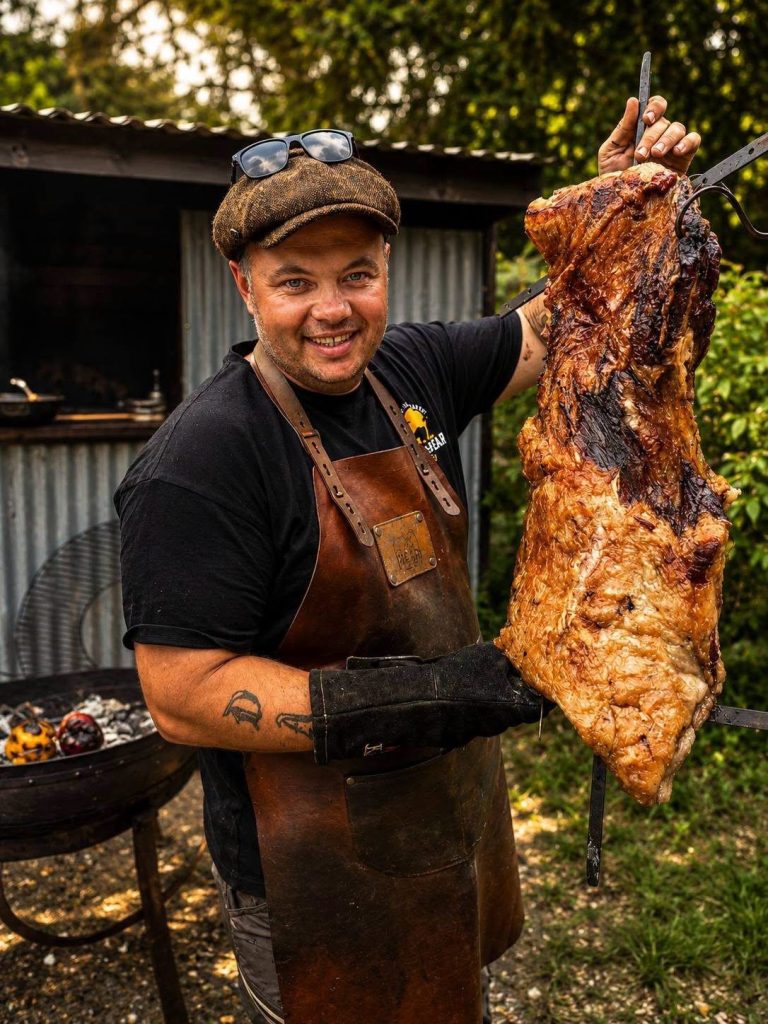
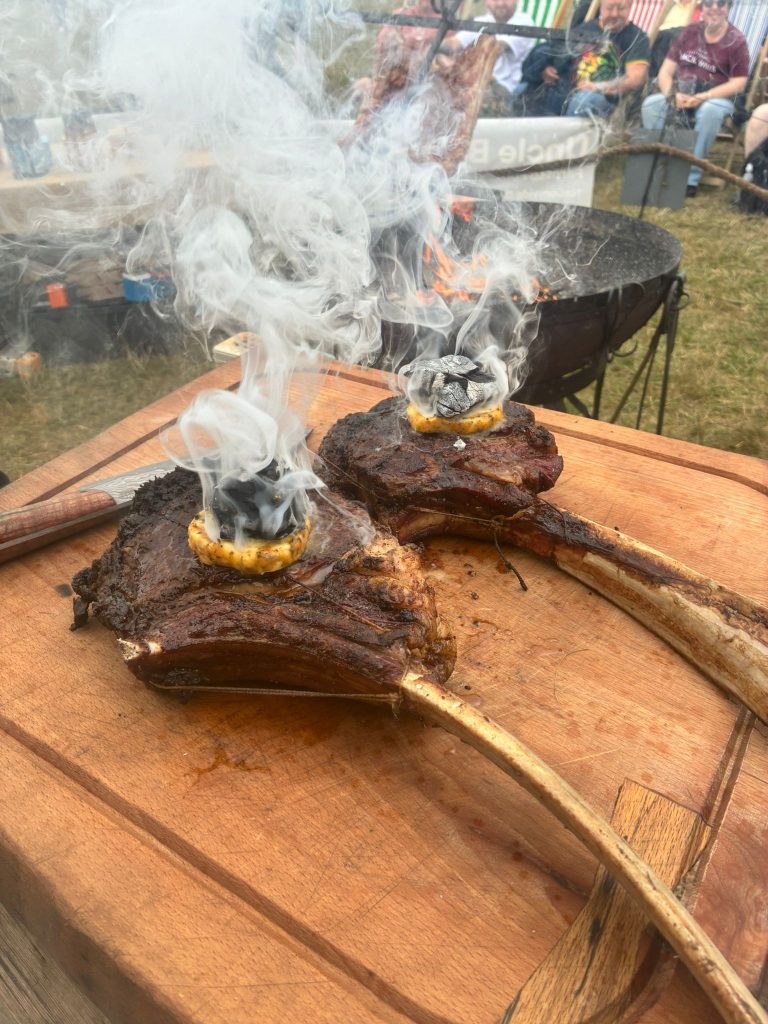
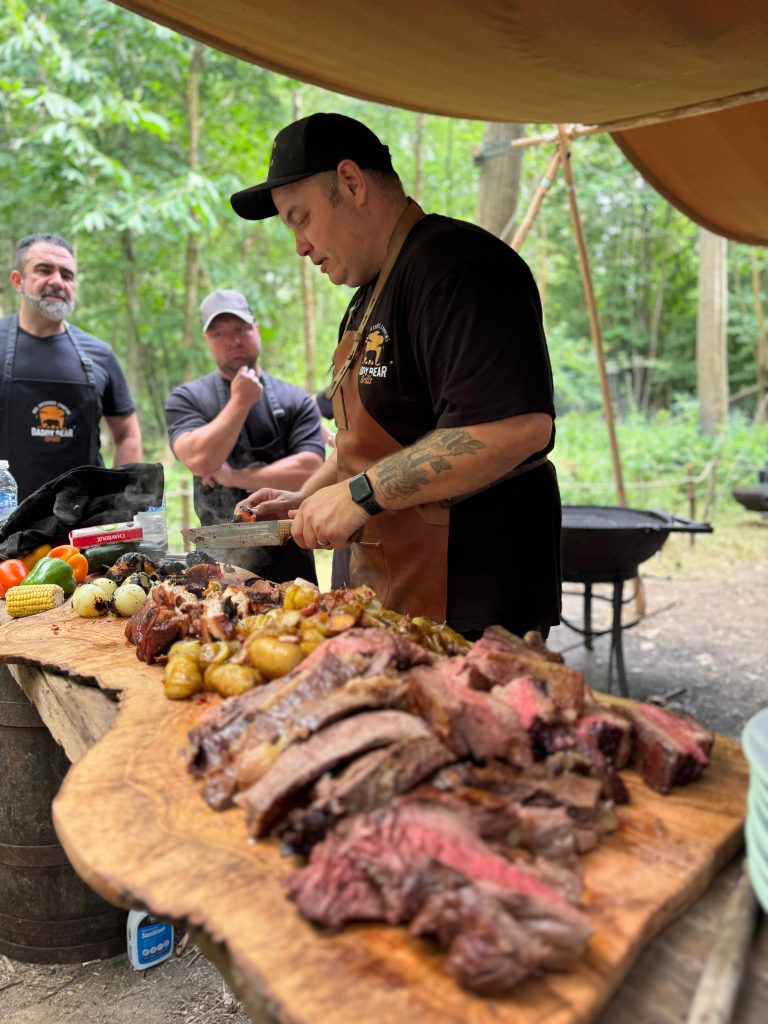
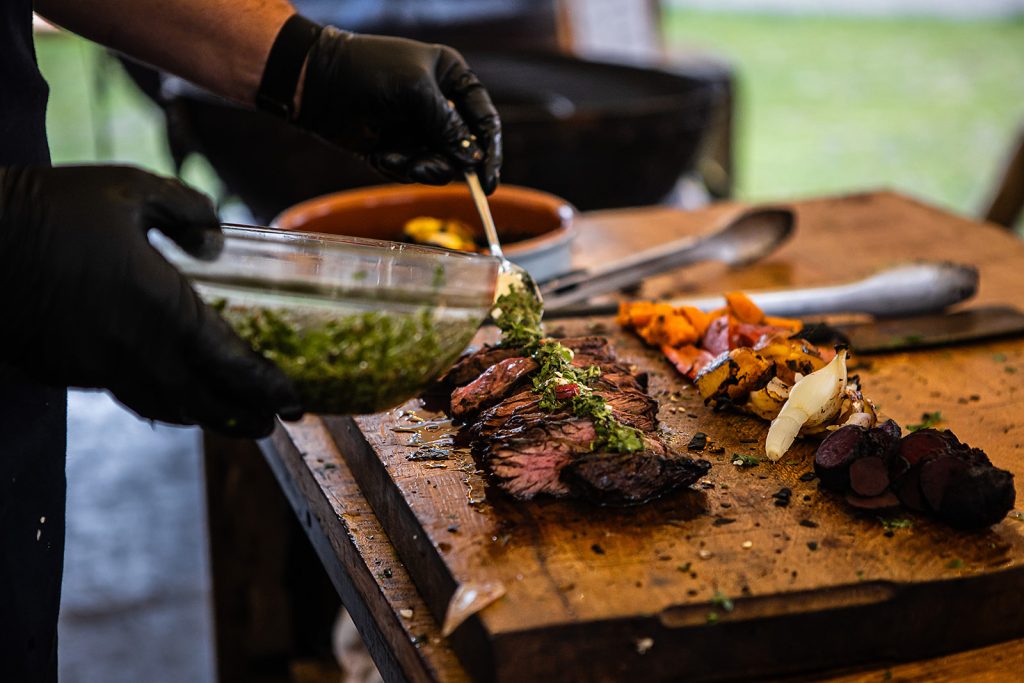
In Argentina, calling an asado a barbecue is mild heresy. An Argentinian asado in the UK is becoming a sought-after experience for food lovers who want more than briquettes and burgers. This guide explains what an asado really is, how it differs from a BBQ, and how you can experience the real thing without leaving Britain.
You’ll learn the history, the technique, the cuts, and the cultural ritual that makes it one of the world’s slowest, most social ways to cook over fire.
What Is an Argentinian Asado?
An Argentinian asado is a traditional method of cooking meat slowly over wood or embers, and the social gathering built around it. Led by a cook called the asador, a proper asado typically lasts several hours. In Argentina, it is considered a cultural ritual, not simply a meal or a barbecue.
The word comes from the Spanish asar, meaning to roast. The fire is built from wood or charcoal. Gas is taboo. The asador often doesn’t sit down until the meat is ready, and the meal stretches across the whole afternoon.
The History and Cultural Weight of the Asado
The asado has its roots in 16th-century gaucho culture on the Argentine pampas. Spanish colonists brought cattle to the region. The gauchos, Argentina’s cowboys, developed open-fire cooking techniques out on the plains.
Today the asado is the Sunday ritual of Argentine family life. Friends and extended family gather around the fire for hours, often well past dark. The food is only half the point.
The other half is the sobremesa, the long, lingering time spent at the table after the eating is done. Argentines treat the asado the way the French treat wine. It is national identity, served slowly.
Asado vs BBQ vs Churrasco: What’s the Difference?
These three fire-cooking traditions are often confused. They share a heat source but little else. Each comes from a different country, uses different kit, and follows a different philosophy.
| Feature | Argentinian Asado | American BBQ | Brazilian Churrasco |
|---|---|---|---|
| Origin | Argentina | Southern USA | Brazil |
| Heat Source | Wood or wood embers | Wood smokers, charcoal | Wood, charcoal, gas |
| Style | Horizontal grill (parrilla) or iron cross (cruz) | Closed smoker, low and slow | Vertical skewers (espetos), rotisserie |
| Typical Meat | Short ribs, flank, offal, chorizo | Brisket, pork shoulder, ribs | Picanha, sausages, rump |
| Seasoning | Coarse salt only | Rubs, marinades, sauces | Rock salt, sometimes herbs |
Why an Asado Is Not a Barbecue
The difference is philosophical, not just technical. A barbecue is about flavour engineering. Rubs, sauces, smoke profiles, low-and-slow timing dialled in like a science.
An asado is about restraint. Salt, fire, meat, time. The skill is in fire management, not seasoning. The goal is not to flavour the meat, but to honour it.
How an Argentinian Asado Works: The Cook’s Method
A proper asado follows five stages, from lighting the fire to resting the meat. The whole process takes between three and five hours. The fire alone takes around 90 minutes before cooking begins.
- Build the fire. Use hardwood like quebracho in Argentina, or oak, beech or ash in the UK. Avoid resinous woods like pine.
- Create the ember bed. Burn the wood down to glowing embers, called brasas. Cooking is done over embers, not flames.
- Set the meat. Order matters. Offal and chorizo go on first as a starter course. Larger cuts like short ribs follow.
- Manage heat by zone. The asador moves embers around under the grill, never the meat. Heat is controlled from below.
- Rest and serve. The meat rests briefly, then is sliced and served in waves throughout the afternoon.
What’s on the Asado? Cuts, Sauces and Sides
The classic Argentinian asado is built around beef, but the spread is varied. A typical asado will move through several courses over a few hours, beginning with smaller items and finishing with the headline cuts.
Traditional cuts:
- Tira de asado: short ribs cut across the bone, the signature cut
- Vacío: flank, prized for its fat cap and flavour
- Entraña: skirt steak, quick to cook and intensely beefy
- Matambre: thin cut from between the skin and ribs, often rolled
- Chorizo: fresh pork sausage, served first in a bread roll (choripán)
- Morcilla: blood sausage, a starter course favourite
The sauces are simple. Chimichurri is the green herb sauce made with parsley, garlic, oregano, vinegar, and olive oil. Salsa criolla is a fresh chopped relish of onion, pepper and tomato.
Sides are modest. Bread, simple salads, roasted vegetables. Malbec is the traditional wine pairing. Modern asados increasingly include grilled vegetables and even fish, challenging the meat-only stereotype.
Can You Have a Real Argentinian Asado in the UK?
Yes, you can have an authentic Argentinian asado in the UK with the right wood, the right cuts, and the right setup. British weather is actually well-suited to the asado. Cool, often damp conditions forgive the long, slow fires the technique demands.
The Argentine hardwood quebracho isn’t available in Britain, but excellent substitutes are. Oak gives a clean, hot burn. Beech is steady and forgiving. Fruitwoods like apple and cherry add subtle sweetness without overpowering the beef.
For the meat, speak to a good independent butcher. Most will happily cut tira de asado across the rib if you ask. Quality British grass-fed beef holds its own against anything from the pampas.
Kit-wise, you have options. An open firepit with a grill works at the simplest end. A proper parrilla or a Kadai Firebowl gives you the heat control to do it properly. The honest caveat: doing an asado badly is easy. Doing one well takes guidance.
Where to Learn Authentic Asado in the UK
Few UK operators teach genuine asado technique. Most fire-cooking classes focus on American BBQ or generic grilling. The Argentinian and Brazilian traditions remain rare on British soil.
At Daddy Bear Grills, our Live Fire and BBQ Classes teach authentic Argentinian asado and Brazilian churrasco techniques on genuine Kadai Firebowls, in a private Yorkshire woodland. It’s one of very few places in the UK where you can learn the real craft on real fire.
The first thing students underestimate is the fire. Most need around 90 minutes of patient ember-building before any meat goes on. That patience is the lesson. Once you’ve cooked over wood properly, briquettes feel like cheating.
Classes cover fire management, wood selection, traditional cuts, chimichurri-making, and the cultural ritual itself. You’ll leave with the technique, the confidence, and a deep respect for the tradition.
The Asado Is a Craft Worth Learning
An asado is one of the few culinary traditions left where the meal is the least important part. The fire, the wait, the people gathered around it. That’s the real asado.
If you’d like to learn the craft of asado on real fire in a private British woodland, our Live Fire and BBQ Classes are where it begins. Book a class, bring a friend, and find out why Argentines build their week around the fire.
One comment on “Argentinian Asado: A UK Guide to South America’s Fire Tradition”
Comments are closed.