

Most bad cooks over fire come down to one thing: the wrong wood. Choosing the best wood for live fire cooking in the UK changes your flavour and your burn. Maybe you have battled acrid smoke, a sour aftertaste, or a fire that died early. You are not alone, and the fix is simpler than you think. This guide covers the woods worth buying, what each one tastes like, and what to avoid.
What is the best wood for live fire cooking?
The best wood for live fire cooking is clean, dry hardwood. Ash is the easiest all-rounder, oak gives long and intense heat, and fruitwoods like apple add sweet smoke. Whatever you pick, it must be properly seasoned or kiln-dried, with a moisture content below 20%.
Get those basics right and the rest is detail. The sections below break down each wood and how to use it.
Why the wood matters more than your kit
Your fuel shapes flavour and burn quality more than your grill ever will. Hardwoods are dense, so they burn hotter, cleaner, and longer than softwoods. Dense wood also builds the steady bed of glowing coals that good fire cooking needs.
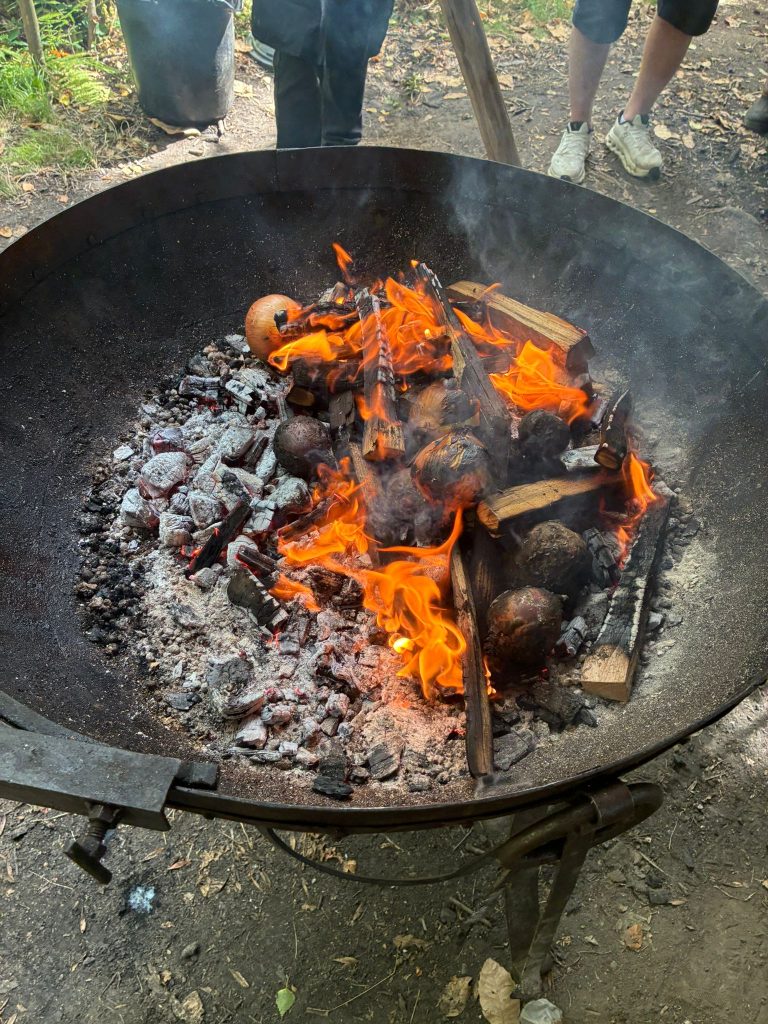
Live fire cooking is really about coals, not flames. The flames look dramatic, but the embers do the cooking. We learned this fast over many cooks at Liz’s Yard in Kent.
A roaring fire with no ember bed chars the outside and leaves the middle raw. Build your coals first, then cook. To see how this compares with other methods, read our guide on live fire cooking versus grilling and smoking.
The best woods for live fire cooking
Here are the woods worth your money, based on more than 100 woodland cooks. Each one earns its place for a different job.
Ash: the best all-rounder
Ash is the easiest wood to start with. It lights quickly, burns clean and steady, and has a neutral flavour that suits almost anything. The ember bed it produces is reliable and forgiving.
New to fire cooking? Start here. Verdict: ash is the most forgiving wood for beginners.
Oak: heat and long cooks
Oak is dense, slow-burning, and seriously hot. It produces long-lasting coals, which makes it ideal for big cuts and long sessions. Its flavour is bolder than fruitwood, so it pairs best with red meat.
Cooking a large joint or brisket? Reach for oak. Verdict: oak is your choice for long, hot cooks.
Apple and fruitwoods: sweet, subtle smoke
Apple, cherry, and pear give a sweet, gentle smoke. They suit lighter foods like fish, chicken, pork, and vegetables. Fruitwoods burn at a medium heat and are easy to light.
Want delicate flavour that will not overpower the food? Pick fruitwood. Verdict: fruitwood is best for fish, poultry, and pork.
Birch and beech: the supporting cast
Birch lights fast and burns bright, so it is brilliant for getting a fire going. Beech is a clean, balanced all-rounder that sits between birch and oak. Use them alongside your main wood for the best results.
One simple rule works well here. Verdict: light it with birch, hold the heat with oak.
Wood comparison table at a glance
This table sums up the best wood for live fire cooking in the UK. Use it as a quick reference before your next cook.
| Wood | Heat | Burn time | Flavour | Best for |
| Ash | Medium to high | Long | Neutral | Everyday cooking, beginners |
| Oak | High | Very long | Bold | Big cuts, long cooks |
| Apple | Medium | Medium | Sweet, mild | Fish, chicken, pork |
| Cherry | Medium | Medium | Sweet, fruity | Poultry, pork |
| Birch | High | Short | Light | Lighting the fire |
| Beech | Medium to high | Medium | Mild | All-round cooking |
Seasoned vs kiln-dried wood, and how dry it must be
Both seasoned and kiln-dried wood work well, as long as they are dry. Aim for a moisture content of 20% or lower. Kiln-dried wood is more reliably dry, so it is the safer choice for cooking.
Wet or green wood is the most common cause of bad fire cooking. It smokes heavily, struggles to light, and leaves a sour taste on your food. A cheap moisture meter saves you a lot of grief.
In the UK, look for the “Ready to Burn” label when you buy. According to the Defra-backed Ready to Burn scheme, wood sold in small volumes must be 20% moisture or less. That label is your quick guarantee of dry, clean-burning wood.
Woods to avoid for cooking (some are dangerous)
Some woods ruin your food, and a few are genuinely dangerous. Never cook over these:
- Softwoods like pine, fir, and spruce. They contain resin, spit sparks, and taste harsh.
- Treated, painted, or varnished timber. The chemicals release toxic fumes into your food.
- MDF, plywood, and chipboard. These are full of glues and bonding agents you should never eat.
- Toxic species such as oleander, laburnum, and yew. These can be poisonous, so keep them well away from food.
- Green or unseasoned wood. It smokes badly and leaves a sour, bitter taste.
When in doubt, leave it out. Stick to clean, dry hardwood and you will never go wrong.
How to get more flavour and a cleaner burn
Small habits separate a good cook from a great one. These come straight from years of competition and festival cooking.
- Build an ember bed first. Let the flames die down to glowing coals before you cook.
- Light with birch or kindling, then add oak or ash to hold the heat.
- Size your splits sensibly. Smaller pieces catch fast, larger logs sustain the heat.
- Mix your woods. Try oak for heat with a little apple for flavour.
Wayne Smith, our founder, reached the final of the British Live Fire Cooking Championships at Ludlow Castle. That experience shapes every tip here. For more practical advice, read our top BBQ tips for UK cooks and our Argentinian asado guide, where the wood does the heavy lifting.
Frequently asked questions
What is the best wood for live fire cooking in the UK?
For most cooks, ash is the best all-rounder. It lights easily, burns clean, and has a neutral flavour. Oak suits longer, hotter cooks, while apple and other fruitwoods add sweet smoke to fish, poultry, and pork. Always use dry, well-seasoned hardwood.
What wood should you never cook over?
Avoid all softwoods like pine and fir, plus any treated, painted, or reclaimed timber. Never use MDF or plywood, which contain glues. Keep toxic species such as oleander, laburnum, and yew away from food. Green wood smokes badly too.
Is seasoned or kiln-dried wood better for cooking?
Either works if the wood is dry, below about 20% moisture. Kiln-dried wood is more reliably dry and ready to use straight away. That makes it the safer choice for cooking. Look for “Ready to Burn” certified wood in the UK.
Can you cook over oak?
Yes. Oak is one of the best woods for live fire cooking. It is dense, so it burns slowly and produces long-lasting coals. The heat is steady and intense, which suits big cuts. Its flavour is bolder than fruitwood.
How dry does wood need to be for cooking?
Aim for a moisture content of around 20% or lower. Wet or green wood is hard to light and smokes heavily. It also leaves a sour taste on your food. Dry hardwood burns hotter, cleaner, and builds a better ember bed.
The bottom line
Clean, dry hardwood wins every time. Start with ash, reach for oak when you need heat, and use fruitwood for sweet smoke. Avoid softwoods, treated timber, and anything toxic.
Reading about fire only gets you so far. The fastest way to learn what good wood really does is to cook over it. Join our live fire and BBQ class in our Kent woodland and put these woods to the test with us.
What is your go-to wood, and what is the worst thing you have ever tried to cook over?