


The Answer
Yes, you can barbecue through a British winter and in several ways it is better than summer. Cold air does not stop charcoal or wood burning, because a glowing coal sits well above 500C regardless of whether the air around it is 25C or 2C. What changes is heat loss. Wind and cold metal pull energy out of your cooker far faster, so in winter you should expect to burn roughly a third more fuel, allow 10 to 15 extra minutes to get to temperature, and shelter the fire from wind rather than worry about the thermometer reading. Never move a barbecue indoors, into a tent, a shed, a garage or under a low porch, because charcoal releases carbon monoxide even while it is cooling and it kills people every year. Winter is also the best season for long cooks, because cool dry air produces cleaner smoke and a better bark. We run live fire and BBQ class experiences in our Kent woodland right through the winter for exactly this reason.
What counts as a winter BBQ?
A winter BBQ is simply outdoor live fire cooking done between roughly October and March in the UK, when air temperatures typically sit between 2C and 8C, daylight is short, and wind and rain are the normal conditions rather than the exception.
The phrase misleads people, because most of us picture a summer barbecue moved into January. That is not what works. A winter BBQ is a different style of cooking: fewer burgers cooked fast in shirtsleeves, more slow cooking, more fire management, more food that arrives hot from the coals into a bowl.
Once you make that shift, the season stops being an obstacle. Roughly a third of our class bookings now fall between November and February, and those are consistently the best days we run.
Can you actually BBQ in a British winter?
Yes. Charcoal and wood do not know what month it is. Combustion needs fuel, oxygen and heat, and a British winter takes away none of the three.
The real difficulties are all about heat loss, not heat production:
- Wind is the main enemy, not temperature. Moving air strips heat from an open fire and from the metal of a cooker by convection. A steady 15mph wind will cost you more cooking heat than a 5C drop in air temperature ever will.
- Cold metal soaks up energy. A kettle body, a grill grate or a fire bowl at 2C absorbs a large amount of heat before it starts giving any back. That is why preheating takes longer.
- Rain cools everything twice. Water landing on hot metal evaporates, and evaporation is a powerful cooling process. It also chills your fuel if you have stored it badly.
- Darkness arrives early. Around the winter solstice, sunset in Kent falls before 4pm. That is the single most underrated winter planning problem, and no amount of fire skill fixes it.
None of these is difficult to solve. They just need to be planned for, which is the part almost every winter grilling article skips.

How much extra fuel and time does winter cooking need?
Plan for about 30% more fuel and about 15 extra minutes to reach a cooking temperature. Those two numbers cover most of the difference between a July cook and a January one.
For a live fire cook over an open bed of embers, we work to these adjustments:
| Factor | Summer | Winter | What to do about it |
|---|---|---|---|
| Time to a usable ember bed | 30 to 40 minutes with wood | 45 to 55 minutes with wood | Light earlier than you think you need to, then hold the fire rather than rush it |
| Fuel used across a three hour cook | Baseline | Roughly a third more | Buy one more bag than the summer equivalent and store it dry |
| Preheat of grates and cast iron | 5 minutes | 15 minutes | Put ironware near the fire from the moment you light it |
| Rest time for cooked meat | 10 to 20 minutes | Same, but insulated | Rest in a warm dry cool box, not on an open board |
| Usable daylight | 8pm plus | Before 4pm | Fix lighting before you fix the menu |
The rest point matters more than people expect. A resting steak in a 3C garden loses core temperature quickly. A cheap cool box, preheated with a bottle of hot water and then emptied, holds a wrapped joint at serving temperature for well over an hour.
Which BBQ setups handle winter best?
Anything with mass and a lid holds temperature more easily, but open fire setups are perfectly viable if you handle wind properly.
| Setup | Winter performance | What to know |
|---|---|---|
| Ceramic kamado | Excellent | Thick ceramic walls barely notice the cold. The most fuel efficient winter option by a distance. |
| Offset or drum smoker | Very good | Heavy steel holds heat well once up to temperature. Insulating the firebox side from wind helps a lot. |
| Kettle barbecue | Good | Thin steel loses heat, but the lid does most of the work. Keep it closed and stop lifting it. |
| Fire pit or open fire bowl | Good with shelter | No lid, so wind control is everything. Build a windbreak and cook deeper into the ember bed. Our fire pit cooking guide covers the technique in full. |
| Asado grill or parrilla | Very good | Adjustable height means you manage heat by moving food rather than by fighting the fire. See our Argentinian asado guide. |
| Gas barbecue | Fair | Propane vaporises less readily in the cold, so output drops. Butane is worse and can effectively stop working near freezing. |
| Disposable foil tray | Poor | Never enough fuel or heat retention, and the least safe option to have near a shelter. |
If you are buying anything for winter specifically, buy mass before you buy features. Thick steel, ceramic or firebrick will do more for your cooking than any accessory.
Is it safe to BBQ in winter?
Winter barbecuing is safe outdoors and genuinely dangerous the moment you bring it under cover. This is the part of the subject that deserves plain language.
Charcoal produces carbon monoxide, an odourless gas, and it keeps producing it while the coals are cooling down, long after they stop looking dangerous. Every UK winter, people are killed or hospitalised after taking a barbecue into a tent, an awning, a campervan, a garage or a shed, usually for warmth. NHS guidance and fire service advice are consistent and unambiguous on this: never take a barbecue inside, and never take a used one inside to cool down.
Practical rules we hold to on every class:
- Cook in genuinely open air. A gazebo with all four sides open is acceptable. A gazebo with the sides zipped down is not.
- Never use a barbecue for heating. If you want warmth, light a separate fire pit or use proper outdoor heating.
- Keep at least a metre of clear space around the fire, and be aware that wet ground plus dark evenings makes trip hazards worse.
- Wear proper gloves rather than gardening gloves, and choose natural fibres. Fleece and synthetics melt.
- Do not leave hot embers to be rained on and forgotten. Douse or contain them fully.
What wood and charcoal should you use in winter?
Dry hardwood, and in England it must legally carry a Ready to Burn certification if you are buying it in units under 2m3.
Since May 2021, the Air Quality (Domestic Solid Fuels Standards) (England) Regulations 2020 have required wood sold in those volumes for domestic burning to be certified, which guarantees a moisture content of 20% or less. Woodsure administers the scheme on behalf of Defra. Look for the logo and a certification number on the bag.
In winter this stops being a technicality and becomes the difference between dinner and disappointment. Damp fuel spends its energy boiling off water instead of making heat, and in cold air that shortfall is immediately obvious. The same log that just about worked in August will not get you to a searing heat in January.
Three winter fuel habits worth building:
- Store fuel off the ground and under cover, not in an unheated shed with a damp floor. Bring the next day’s wood inside overnight if you can.
- Use lump charcoal rather than briquettes. Briquettes contain binders and fillers that transfer to food, and they are slower to get going from cold.
- Build a bigger fire than you need and cook off part of it. A deep ember bed is a heat battery, and in winter you want reserves. Our guides to building a cooking fire and the best wood for live fire cooking in the UK go into both in detail.
What should you cook on a winter BBQ?
Cook things that reward long, steady heat and arrive at the table hot. The summer menu of thin burgers and quick chicken thighs works against you in winter, because small pieces of food cool between the fire and the plate.
What works best in the cold:
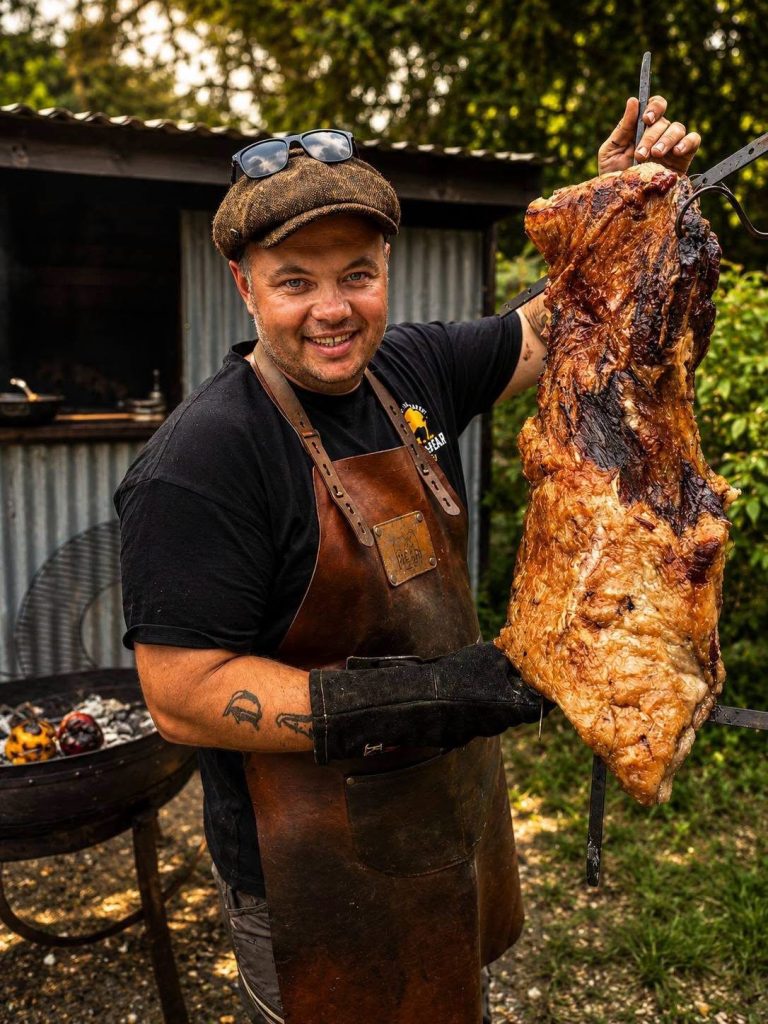
- Big cuts cooked low and slow. Brisket, beef short rib, pork shoulder and lamb shoulder. Cool dry winter air produces cleaner smoke and a firmer bark than humid summer air does.
- Anything in a pot over the fire. Chilli, beef shin stew, curry, cassoulet. A cauldron or Dutch oven is the most underused winter fire tool in Britain.
- Whole vegetables buried in embers. Celeriac, squash, beetroot and onions cooked in the coals for an hour come out sweet and smoky, and they cost almost nothing.
- Thick steaks cooked directly on the coals. Cold air makes the contrast of a fiercely seared crust even better. See our guide to cooking a caveman steak on the coals.
- Flatbreads on the fire edge. Hot bread straight off the fire is the single best thing you can hand people who are standing outside in the cold.
- Mulled cider or hot spiced apple in a pan on the fire. Not a garnish. It is what keeps guests standing near the fire instead of drifting indoors.
Serve in bowls rather than on plates, warm the bowls first, and get food from fire to hand in under a minute. Those three habits fix most winter serving problems.
How do you handle rain, wind and darkness?
Solve wind first, light second, rain third. Most people do it in the opposite order and wonder why the cook was hard work.
Wind. Build or buy a windbreak and place it upwind of the fire, not around it. Fully enclosing a fire chokes the air supply and produces smoke rather than heat. A wall, a hedge, a stack of logs or a purpose made steel windbreak all work. Position the cooker so any breeze runs across the ember bed rather than into your face.
Light. Head torch on your head, second light on the food. You cannot judge the colour of a crust or the state of an ember bed by firelight alone, and colour is how live fire cooks read doneness. Warm white light is better than cold blue, which makes everything look underdone.
Rain. A high open sided shelter with the fire outside its edge, or simply a large golf umbrella clamped to a stand, will cover the cook. Do not put a roof directly over an ember bed. Keep a dry towel and dry gloves in a sealed box, because wet gloves conduct heat straight to your hands and are genuinely dangerous.
Bonfire Night and Christmas: the two best fire dates in the British year
The two peak moments for live fire in the UK calendar are 5 November and the fortnight before Christmas, and both suit fire cooking far better than a summer barbecue does.
Bonfire Night works because everyone is already outdoors, already cold and already looking at a fire. Ember baked potatoes, a pot of chilli, hot dogs on hardwood embers and mulled cider will do more for the evening than fireworks will.
The Christmas period works because live fire handles the things a domestic oven struggles with. A turkey crown, a rib of beef or a whole side of salmon cooked over embers frees the oven completely, which is the real Christmas Day bottleneck in most kitchens. It also gets people out of the house at the exact point the house feels smallest.
If you are buying for someone who cooks, a winter fire class lands better than another gadget. Our BBQ experience gift vouchers are valid year round, and winter dates are the ones people remember.
Winter live fire cooking in Kent
Our woodland at Liz’s Yard runs classes through the winter, and the winter sessions have become our favourites. The woodland is sheltered, the fires are large, the food is the kind you actually want when it is cold, and the group stands close together around the fire instead of spread out across a lawn.
You do not need any kit and you do not need experience. You need a warm coat, boots and a willingness to stand outside for a few hours. Everything else, including the fire building, the fuel, the food and the hot drinks, is on us.
Have a look at our live fire and BBQ class experiences, browse the woodland live fire cooking experience, or get in touch about a private group, a corporate day or a Christmas booking. Winter dates go quickly from October onwards.
Winter BBQ FAQs
Can you BBQ in winter in the UK? Yes. Charcoal and wood burn the same in cold air. You need about a third more fuel, about 15 minutes more preheating, and shelter from wind. Temperature itself is rarely the problem.
Is it safe to BBQ in the cold? Outdoors, yes. Never bring a barbecue into a tent, awning, shed, garage, campervan or porch, even to cool down, because charcoal releases carbon monoxide as it burns and while it cools. Carbon monoxide has no smell and is fatal.
Does food take longer to cook in winter? Getting the fire ready takes longer, and heavy metal cookers take longer to heat, but once you have a stable ember bed the food itself cooks at a similar rate. Cooling after cooking is the bigger issue, so rest food insulated and serve fast.
What is the best BBQ for winter use in the UK? A ceramic kamado is the most fuel efficient, and a heavy steel offset or drum smoker is the best for long cooks. A standard kettle works fine if you keep the lid down. Gas performs worst in the cold, especially butane.
Do you need to use more charcoal in winter? Yes, plan for roughly 30% more. Cold metal and wind both pull heat away, so the fire has to work harder to hold the same cooking temperature.
Can you barbecue in the rain? Yes, with a high open sided shelter or an umbrella over the cook rather than over the fire. Keep fuel and gloves dry, and never enclose the fire to keep the rain off.
What should you cook on a winter BBQ? Long cooks such as brisket, short rib and pork shoulder, anything in a pot over the fire, whole vegetables buried in embers, thick steaks straight on the coals, and hot flatbreads. Avoid thin, quick cooking food that goes cold between fire and plate.
When is the best time of year for live fire cooking in the UK? Autumn and winter. Cool, dry air produces cleaner smoke, better bark and a more comfortable experience standing next to a large fire than a humid July afternoon does.