

Burnt on the outside, raw in the middle? That is how most first fires end up. Learning how to build a cooking fire properly fixes that fast.
Here is the truth most people miss. A cooking fire is about steady coals, not roaring flames. Get the coals right and everything else gets easier.
This guide shares the exact method we teach in our live fire classes. You will learn how to pick wood, build the fire, read the coals and set heat zones. By the end, you can cook over fire with confidence.
Cooking fire vs campfire: what is the difference?
A cooking fire is a managed bed of hot, glowing coals built to give steady, controllable heat for food. A campfire is built for warmth and light, so it burns with tall flames. You cook on coals, not flames. That single shift improves your food more than any gadget.
Flames look exciting but they jump around and spike in heat. Coals sit still and glow at a steady temperature. Even heat is what cooks food right through.
| Feature | Campfire | Cooking fire |
| Built for | Warmth and light | Cooking food |
| Flames | Tall and lively | Burned down low |
| You cook on | Not designed for it | Glowing coals |
Want the full breakdown of cooking styles? Read our guide to live fire cooking vs BBQ, grilling and smoking for the differences in plain English.
What you need to build a cooking fire
You need four things before you light anything: fuel, a fire starter, the right tools and a safe spot. Sort these first. A scramble halfway through wrecks your timing.
Fuel comes in three stages, and you need all three:
- Tinder: dry, fast-igniting material like dry grass, bark or paper.
- Kindling: small dry sticks that catch fire quickly.
- Fuel wood: larger logs that burn down into hot coals.
Tools and setup stay simple:
- Long tongs or a fire poker to move coals safely.
- Heatproof gloves and a steady cooking grate.
- A flat, sheltered spot with clear ground around it.
What is the best wood for a cooking fire?
The best wood for a cooking fire is dry, seasoned hardwood. Oak, ash, beech and birch burn long and steady. They give clean smoke and a strong bed of coals.
Best woods for cooking:
- Oak: long, steady heat and excellent coals.
- Ash: burns clean and lights easily.
- Beech: hot and even.
- Birch: lights fast with a pleasant scent.
Woods and fuels to avoid:
- Softwoods like pine: they spark and can taint food.
- Damp or green wood: bitter smoke and weak heat.
- Treated, painted or scrap wood: it releases harmful chemicals.
Dry wood is the part beginners get wrong most. According to the Ready to Burn scheme, firewood should hold under 20% moisture to burn cleanly. Wet wood smokes, spits and struggles to make good coals.
Charcoal works well too and follows the same coal-based method. Whatever fuel you pick, keep it dry and stored under cover. Browse our recipes and fire tips for more on prepping fuel.
How to build a cooking fire step by step
Follow these steps in order for a clean coal bed every time. Our founder Wayne Smith teaches this exact method in every class. He refined it as a British Live Fire Cooking Championships finalist at Ludlow Castle.
- Clear your space. Pick a flat spot and remove old ash, leaves and debris.
- Lay your tinder. Place a loose bundle of tinder in the centre.
- Build a structure. Stack kindling in a teepee or log cabin shape around the tinder.
- Light it. Light the tinder and let the kindling catch slowly.
- Add fuel wood. Once the kindling burns well, add larger logs.
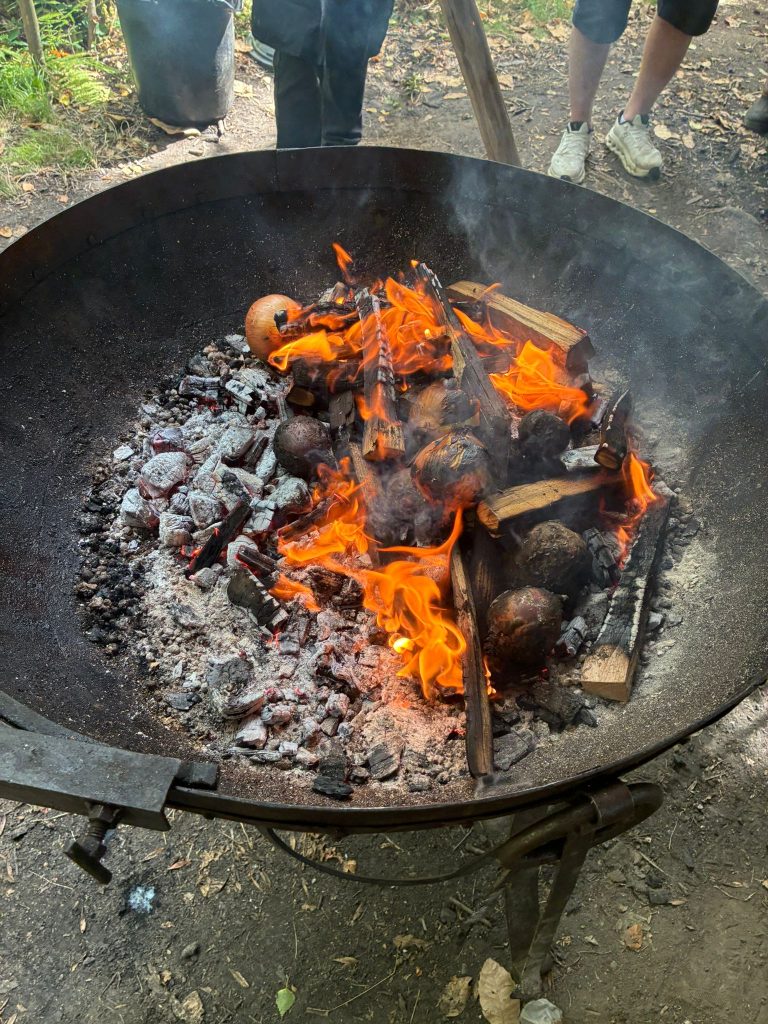
- Let it burn down. Wait 45 to 90 minutes for a glowing bed of coals.
- Rake the coals. Spread the coals into an even layer, ready to cook.
Resist the urge to cook over big flames. Flames char the outside before the inside cooks. Patience here is the whole game.
Teepee vs log cabin: which fire should you build?
Both shapes work, so pick based on your cook. A teepee lights fast and burns hot. A log cabin burns slower and gives a steadier coal bed.
| Structure | Best for | Why it works |
| Teepee | Quick, hot fires | Lights fast, strong central heat |
| Log cabin | Longer, steady cooks | Even burn, reliable coal bed |
New to fire cooking? Start with a log cabin. It is forgiving and gives you time to learn the heat.
Different fire traditions build different shapes. See how it works in our guide to Argentinian asado.
How do you know when the coals are ready?
Your coals are ready when they glow and wear a light grey coat of ash. The flames should be gone or very low. Now you can test the heat with your hand.
Hold your hand about 12cm above the coals and count how long you can keep it there:
- 2 to 3 seconds: high heat, great for searing.
- 4 to 5 seconds: medium heat, good for most grilling.
- 6 to 7 seconds: low heat, ideal for slow cooking.
We use this test in every class because thermometers do not reach the grill grate. Your hand never lies.
Build heat zones for even cooking
Heat zones stop your food burning on one side and staying raw on the other. Rake your coals into a thick pile on one side and a thin layer on the other. This gives you a hot zone and a cool zone.
Sear your food over the hot zone first. Then move it to the cool zone to finish cooking through. Thick cuts like chicken and joints love this method.
Match the fire to the meal. A fast, hot fire suits steaks and burgers. A low, steady fire suits joints, stews and slow cooks. For more ways to nail the cook, see our top BBQ tips for a UK barbecue.
Common cooking fire mistakes (and how to fix them)
Most fire problems trace back to a few simple errors. Fix these and your results jump straight away.
- Fire keeps dying: your wood is damp or packed too tight. Use dry wood and leave gaps for air.
- Cooking over flames: wait for coals before you cook anything.
- Bitter, smoky taste: you burned green or wrong wood. Switch to seasoned hardwood.
- Too hot to stand near: let the fire settle or spread the coals out.
- Fire ready too late: start 45 to 90 minutes before you want to eat.
Keep a fire poker close so you can adjust coals as you go. Small tweaks keep the heat where you want it.
Cooking fire safety in the UK
Safety keeps a great cook from turning into a bad day. Only light fires in safe, approved spots and never in dry or windy weather. Keep water or sand within reach at all times.
- Never leave a fire unattended.
- Check for local fire restrictions before you light.
- Never burn treated, painted or scrap wood.
- Put the fire fully out and let ashes cool before you leave.
According to Fire England, you should never use barbecues or open fires during heatwaves. Treat every fire with respect and it will reward you.
Build your first proper cooking fire
Good fire cooking comes down to three things: dry hardwood, patient coals and smart heat zones. Master those and you can cook almost anything over flame. The big blaze was never the goal; the glowing coal bed always was.
Ready to learn this hands-on? Join one of our Live Fire and BBQ classes in our Kent woodland and build your first proper cooking fire beside a chef. You can book your experience here.
So what will you cook first on your new coal bed?
Frequently asked questions
How long should you let a fire burn before cooking?
Let your fire burn for 45 to 90 minutes before cooking. You are waiting for the flames to die down into a glowing bed of coals. Coals give steady, controllable heat, while flames burn the outside and leave the inside raw.
What is the difference between a cooking fire and a campfire?
Campfires burn for warmth and light with tall flames. A cooking fire is a managed bed of hot coals built for steady cooking heat. You cook on the coals, not the flames. That single change matters most.
What is the best wood for a cooking fire?
Seasoned hardwood works best, such as oak, ash, beech or birch. These burn long and steady and make strong coals. Avoid softwoods like pine, which spark and can taint food. Never burn treated or painted wood.
How do you know when coals are ready to cook on?
Coals are ready when they glow under a light grey coat of ash with little or no flame. Hold your hand about 12cm above them. If you can hold it for two to three seconds, the heat is high and good for searing.
Can you cook over flames or do you need coals?
Cook over coals, not flames. Flames spike and move, which makes heat impossible to control and burns the outside of food. Let the fire burn down to a steady bed of glowing coals first. That is the heat source you cook on.
One comment on “How to Build a Cooking Fire: A Step-by-Step Guide”
Comments are closed.